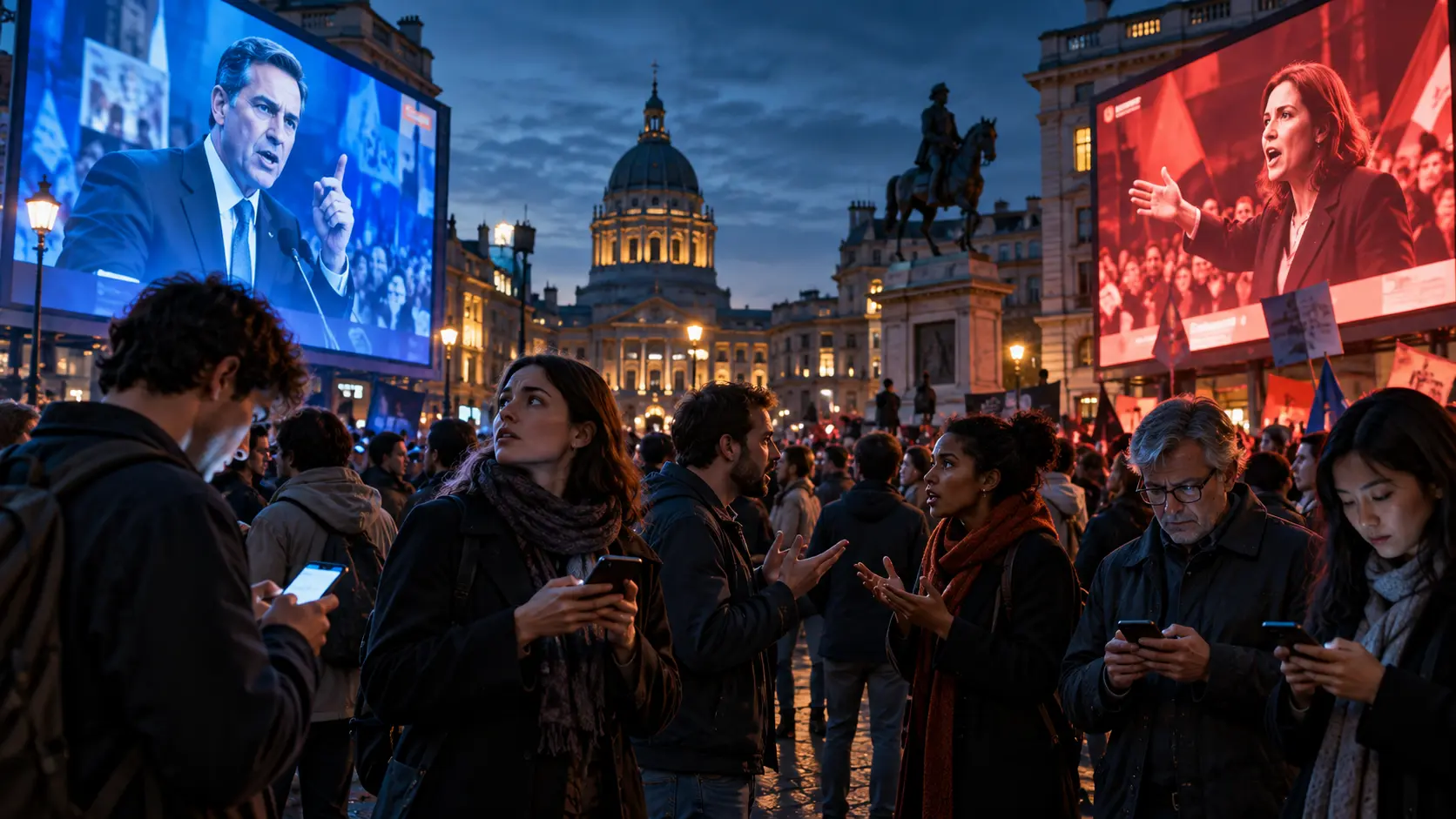
Social media has changed politics by altering how political information is produced, distributed, discussed, and discovered. Citizens no longer depend mainly on newspapers, television networks, radio stations, or political parties to encounter political messages. Politicians, activists, journalists, organizations, and ordinary users can communicate directly with large audiences. At the same time, digital platforms use recommendation and ranking systems to decide which posts receive attention. The social media influence on politics therefore comes from a combination of human behavior, platform design, political strategy, and automated distribution.
Before the rise of major digital platforms, traditional media organizations played a central role in deciding which political events became widely visible. Editors selected stories for newspapers, broadcasters determined which subjects appeared on television, and journalists decided which politicians or experts to interview. Political parties also acted as important intermediaries between citizens and government by organizing campaigns, distributing information, and mobilizing supporters. These institutions never exercised complete control over public opinion, but they strongly shaped the political information environment.
Social media weakened some of these traditional barriers to publication. A political candidate can now release a statement directly to millions of followers without waiting for a television interview. An activist can document an event with a smartphone and attract public attention before major news organizations cover it. Citizens can debate policies, share evidence, criticize officials, and organize demonstrations through digital networks. This direct communication can broaden political participation and make public debate more immediate.
The decline of traditional gatekeeping does not mean that social media has no gatekeepers. The mechanisms are simply different. On large platforms, users produce far more content than anyone could possibly view. Recommendation systems therefore rank and select posts according to signals intended to predict what each user is likely to find relevant or engaging. These automated systems have become powerful intermediaries between political speakers and their audiences.
Recommendation algorithms can consider many types of information, including previous interactions, accounts a user follows, relationships between users, the popularity of a post, viewing behavior, and predicted interest. The precise design varies across platforms and changes over time. The important point is that visibility is not distributed evenly. Some posts are shown to large audiences while others receive little attention, and automated ranking plays a role in determining that difference.
This makes attention a central resource in digital politics. Politicians, news organizations, activists, influencers, and ordinary users compete within the same information environment. Content that attracts reactions may gain greater visibility because engagement signals that users are interested. Political communication is therefore influenced not only by what speakers want to say but also by what performs well within the architecture of the platform.
Certain formats can benefit from this environment. Short videos, striking images, emotionally direct language, memorable slogans, and conflict can be easier to consume and share than lengthy explanations of complex policy. This does not mean that social media inevitably produces shallow political debate. Detailed analysis, educational material, investigative journalism, and serious discussion also circulate online. However, the structure of platforms can create strong incentives to present ideas in forms that capture attention quickly.
Competition for engagement can affect the behavior of political actors. Candidates may learn that confrontational posts receive more attention than detailed policy proposals. Activists may use dramatic images to make an issue visible. News organizations may write headlines designed to compete within crowded feeds. These adaptations are not dictated by algorithms alone. People observe how audiences respond and adjust their strategies accordingly, creating a feedback loop between users, political communicators, and platform systems.
Social media also changes the speed at which political information travels. A speech, controversy, video, or rumor can spread internationally within minutes. This can help citizens learn about important events quickly, particularly during emergencies or periods of political instability. It can also make verification more difficult because inaccurate claims may circulate widely before journalists, researchers, or public authorities have time to investigate them.
The influence of social media on public opinion is complicated because exposure does not automatically produce persuasion. Seeing a political message does not mean accepting it. Users bring existing beliefs, identities, experiences, and loyalties to what they encounter online. They may agree, reject, ignore, ridicule, reinterpret, or investigate a post. People also discuss political information with friends and family and encounter messages through many sources outside social media.
This is why simple claims that platforms directly control public opinion are misleading. Social media can shape the information people see and the topics they encounter, but opinion formation is a broader social process. Economic conditions, personal experiences, education, cultural values, political institutions, traditional media, interpersonal relationships, and major events all affect how people think about politics.
Platforms can nevertheless influence which issues receive attention. When a topic becomes highly visible online, journalists may begin covering it more extensively, politicians may respond to it, and citizens may interpret it as particularly important. This interaction between digital platforms and traditional media means that the two systems should not be treated as completely separate. Social media can amplify stories first reported by journalists, while journalists increasingly monitor digital platforms for emerging controversies, public reactions, and political statements.
Another important feature is the possibility of personalized information environments. Two people using the same platform may encounter very different political content because they follow different accounts, participate in different communities, and receive different recommendations. This personalization can make social media feel highly relevant to individual interests, but it can also reduce the amount of shared political information that citizens encounter.
The idea of an entirely isolated “filter bubble,” however, should be treated carefully. Users often encounter opposing views through news coverage, comments, reposts, family members, critics, or material shared specifically to provoke disagreement. Digital networks do not necessarily protect people from conflicting opinions. In some cases, they may expose users to political conflict more frequently than traditional media did.
Exposure to disagreement can itself have mixed consequences. Encountering different views can broaden understanding, but repeated hostile exchanges can also strengthen existing identities or increase distrust. People do not always respond to contradictory information by changing their minds. Sometimes they become more committed to their previous position, especially when an issue is closely connected to social identity or partisan loyalty.
Social media has also changed who can become politically influential. Traditional political influence often depended on institutional position, access to major media, or control of political organizations. Digital platforms make it possible for independent commentators, activists, community organizers, and creators to build large audiences without those traditional resources. This can diversify public debate, but it can also give substantial visibility to people with little accountability or expertise.
Political leaders use these platforms strategically because direct communication allows them to bypass journalistic interpretation. They can frame events in their own language, respond rapidly to criticism, and mobilize supporters. This direct access can strengthen political participation, but it can also reduce opportunities for questioning and verification that normally occur when journalists act as intermediaries.
Platforms themselves therefore occupy an unusual political position. They are private organizations that establish rules governing large spaces of public communication. They decide how recommendation systems operate, what forms of advertising are permitted, how accounts are verified, which behavior violates platform rules, and how prohibited material is moderated. These decisions can have political consequences even when they are not intended to favor particular political outcomes.
Content moderation is especially difficult because political speech often involves disagreement about facts, values, and interpretation. Some content, such as threats or coordinated manipulation, may violate clear platform rules. Other material falls into more difficult categories involving satire, misleading claims, disputed evidence, or rapidly evolving events. Automated moderation can make mistakes because algorithms may struggle with context, irony, local culture, and political language.
Social media also lowers the cost of political organization. Campaigns can recruit volunteers, activists can coordinate demonstrations, advocacy groups can raise money, and citizens can contact one another across geographic boundaries. Movements that would previously have depended on physical meetings or established organizations can form quickly around shared interests. Digital coordination has therefore expanded opportunities for political participation as well as political conflict.
The same infrastructure can be used for manipulation. Fake accounts, coordinated networks, automated posting, and deceptive campaigns can create an exaggerated impression of public support or opposition. Political actors may attempt to influence discussion by flooding platforms with repeated messages or by presenting organized activity as spontaneous citizen behavior. Detecting these tactics can be difficult because legitimate political movements also rely on coordinated communication.
Understanding social media influence on politics therefore requires separating visibility from persuasion. Platforms can strongly influence what becomes noticeable, which topics dominate discussion, and how rapidly information spreads. Their effect on individual beliefs is less direct and depends on how users interpret what they see. Political influence emerges from the interaction between technological systems and human judgment rather than from algorithms acting alone.
A healthy information environment consequently requires more than changing recommendation algorithms. Media literacy, independent journalism, transparent platform policies, political advertising disclosure, privacy protection, access for researchers, and effective rules against deceptive manipulation all play important roles. Users also remain active participants who choose whom to follow, what to share, and which information to trust.
Social media has not replaced older forms of political influence, but it has reorganized them. Newspapers, television networks, political parties, governments, activists, and citizens now operate within an environment where digital platforms help distribute attention. The result is a political system in which communication is faster, more personalized, more participatory, and often more competitive. The central democratic question is not whether social media influences politics—it clearly does—but how institutions and citizens can preserve open political participation while making the systems that shape public visibility more transparent and accountable.
