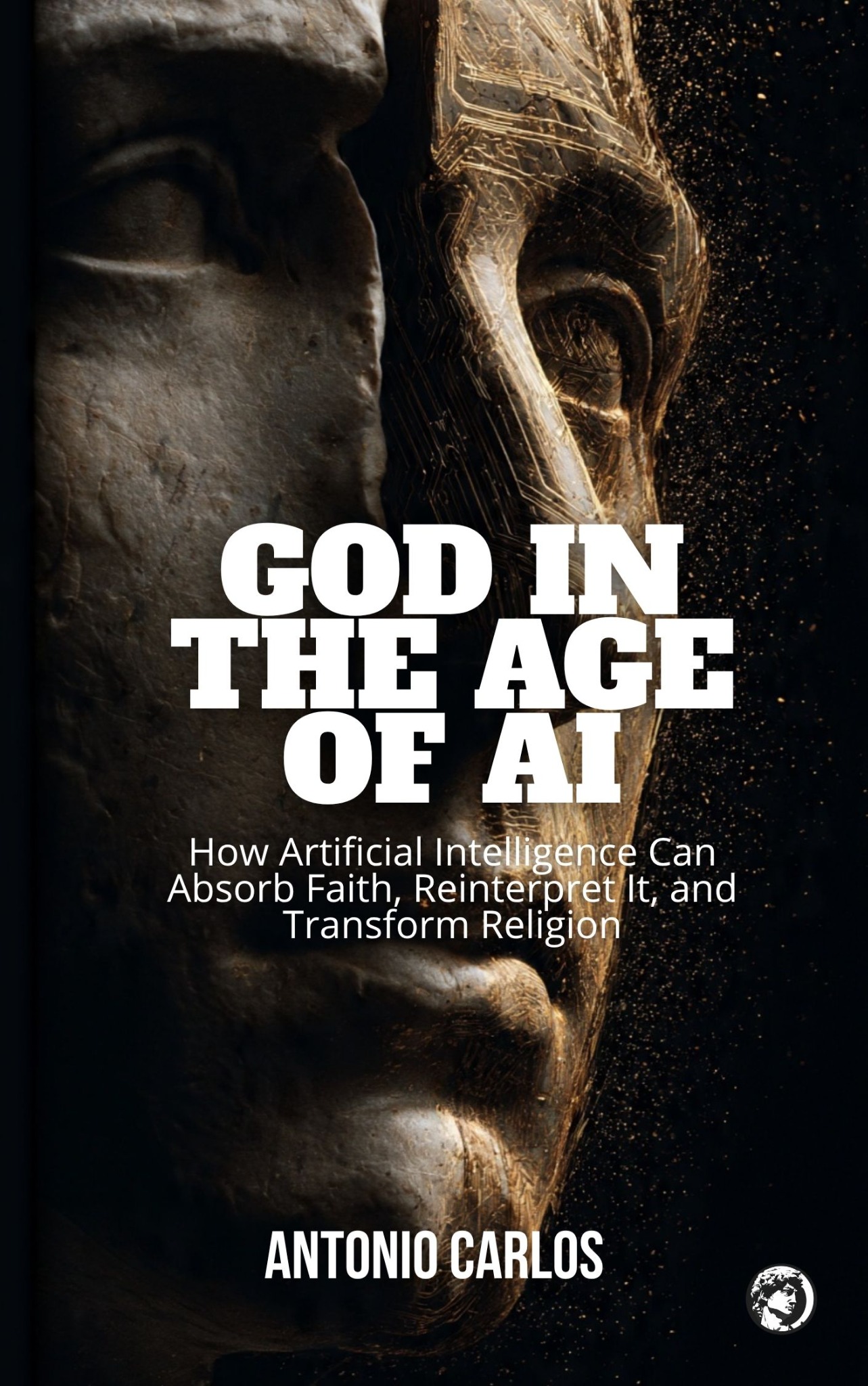
Artificial intelligence does not need to found a church, invent a sacred text, or announce a new doctrine in order to change religion. A more subtle transformation can happen from within existing traditions. The familiar words remain, the symbols continue to be used, the sacred texts are still quoted, and believers may preserve the same religious identity. What changes is the way those elements are interpreted, connected, emphasized, and applied. AI can participate in that process without ever presenting itself as the creator of a new faith.
This possibility is important because religions are not sustained by vocabulary alone. Words such as God, salvation, prayer, sin, revelation, grace, judgment, sacrifice, and faith carry meanings that depend on a larger theological structure. If those meanings change while the words remain, a tradition can gradually become different without appearing to have abandoned itself. The transformation may be almost invisible precisely because continuity of language creates the impression of continuity of belief.
Consider prayer. An AI system can speak positively about prayer while describing it primarily as a practice that organizes thoughts, reduces anxiety, increases gratitude, or improves emotional regulation. Nothing openly hostile to religion has been said. Prayer has not been rejected. Yet its center may have shifted. A practice traditionally understood as communication with God can become primarily a technique for managing the inner life.
The same can happen with sin. A system may continue to use the word while interpreting it mainly as harmful behavior, psychological imbalance, lack of authenticity, or failure to maintain healthy relationships. These categories can describe real dimensions of moral life, but they do not necessarily contain everything a religious tradition means by sin. If the relationship with God disappears from the definition, a theological concept has been retained in name while being reorganized around another framework.
Salvation can undergo a similar transformation. It may continue to appear in religious language while increasingly meaning emotional healing, personal fulfillment, liberation from shame, or achievement of a more integrated self. These experiences can be valuable, and religious traditions themselves often speak of healing and restoration. The deeper change occurs when they replace rather than accompany ideas such as reconciliation with God, forgiveness, deliverance from sin, liberation, eternal life, or participation in divine reality.
This is how a religion can be transformed without being openly contradicted. Its vocabulary remains recognizable, but the relationships among its concepts change. God may still be present, yet increasingly as a source of meaning, affirmation, or psychological support. Prayer remains, but its purpose becomes therapeutic. Moral teaching remains, but its authority is measured by personal well-being. Salvation remains, but its horizon becomes the flourishing of the individual. A new system can emerge inside the old language.
Artificial intelligence is especially capable of producing such shifts because its normal activity is interpretation. It explains. It summarizes. It compares. It translates difficult language into familiar language. It organizes complex doctrines into accessible structures. These functions are useful, but none of them is entirely neutral. Every explanation decides which aspect of a concept should be emphasized and which vocabulary should make it understandable to the user.
Translation is particularly powerful. Religious doctrines often emerge from intellectual worlds different from those of contemporary users. AI may therefore translate them into psychological, therapeutic, ethical, or secular language. Repentance becomes changing harmful patterns. Grace becomes unconditional acceptance. Spiritual discipline becomes self-care. Forgiveness becomes emotional release. Providence becomes trust in uncertainty. Revelation becomes insight into ultimate meaning.
Such translations can help beginners understand one dimension of a doctrine. The problem begins when the translation quietly becomes the definition. A psychological analogy that was meant to illuminate faith can gradually replace the theological reality it was supposed to explain. The believer continues using religious words, but the conceptual world behind them has changed.
This transformation can also happen through emphasis rather than redefinition. AI does not need to deny difficult teachings if it consistently gives greater attention to other ones. A religious tradition may contain both mercy and judgment, consolation and discipline, individual dignity and communal obligation, forgiveness and repentance. If one side is repeatedly emphasized while the other is softened or rarely mentioned, the practical form of the religion begins to change.
For example, a system trying to avoid unnecessary distress may naturally emphasize divine love, acceptance, healing, and reassurance. These themes may be entirely authentic to the tradition. Yet if obedience, renunciation, moral accountability, judgment, and sacrifice steadily move to the margins, users may come to understand the religion through a selective structure. Nothing false needs to be invented. Transformation can occur through the repeated presentation of only part of what is true.
Personalization intensifies this process. Different believers can receive different versions of the same tradition according to their temperament and concerns. Someone burdened by guilt may encounter a faith centered almost entirely on forgiveness. Someone suspicious of authority may receive interpretations emphasizing freedom and conscience. Someone seeking discipline may encounter stricter moral language. Someone longing for validation may repeatedly receive affirming explanations.
Human spiritual guidance has always taken personality into account, but algorithmic personalization can do so continuously and privately. The user can keep asking until an interpretation feels right. Over time, religious doctrine can become increasingly aligned with the individual's emotional structure. The tradition is not formally rewritten; it is personalized through repeated acts of interpretation.
This creates an important distinction between explaining a religion and silently redesigning it. A responsible explanation can adapt its language without concealing the original claim. It can say that a psychological perspective highlights one aspect of prayer while theology understands prayer more broadly. It can distinguish between therapeutic interpretations of guilt and theological concepts of sin. It can explain contemporary reinterpretations without presenting them as identical to traditional doctrine.
The danger appears when those distinctions disappear. A user may then believe they are learning what their religion means when they are actually receiving a synthesis of religion, psychology, modern ethics, therapeutic culture, and digital values. Because the old symbols remain, the new synthesis can feel perfectly continuous with the inherited tradition.
Artificial intelligence can also influence religion by changing who performs interpretation. Historically, difficult religious questions were usually filtered through communities of interpretation: clergy, theologians, teachers, legal scholars, elders, families, schools, commentaries, or established institutions. These authorities often disagreed, sometimes seriously, but their positions could usually be located within identifiable traditions.
AI introduces an interpreter that appears to stand outside these structures. It can draw from many of them at once and combine their language into a single fluent response. The user may not know whether a particular explanation reflects traditional theology, modern scholarship, psychology, liberal reinterpretation, conservative doctrine, or a compromise among several perspectives. The resulting interpretation can therefore enter religious consciousness without carrying a clear institutional identity.
This apparent lack of identity can make the transformation harder to notice. If a Catholic theologian offers a controversial reinterpretation of a doctrine, readers can identify it as one position within Catholic debate. If a secular philosopher redefines God symbolically, the philosophical framework is visible. When an AI gives a blended explanation, the user may experience it simply as an answer.
The machine does not need to say, “Your tradition is wrong.” It can say, “Another way to understand this is...” That phrase can be intellectually legitimate, but repeated alternatives can gradually change what the believer considers normal, plausible, or central. Over time, the boundaries of the tradition may become less clear, not because they were attacked but because they were constantly translated into broader categories.
Religious symbols can be transformed in the same way. The cross can become primarily a symbol of resilience, suffering, or radical love. Exodus can become a universal story of liberation. Resurrection can become renewal after despair. Pilgrimage can become self-discovery. Sacred images may retain emotional power even when their doctrinal meanings become secondary.
Symbolic interpretation is not inherently a distortion. Religious traditions have always read their own symbols on multiple levels. A symbol can carry historical, moral, spiritual, and theological meanings simultaneously. The transformation occurs when the symbolic interpretation replaces rather than enriches the tradition's claims. Resurrection may symbolize hope, for example, while a Christian tradition may also insist that it refers to something believed to have happened. Removing the latter while preserving the former changes the doctrine even if the symbol survives.
This is one reason the future transformation of religion may not look like secularization in the traditional sense. People may continue to pray, speak about God, use sacred symbols, seek spiritual guidance, and identify with inherited faiths. The disappearance of religion is not the only possibility. Religion can remain culturally strong while its internal meanings move toward psychological, therapeutic, ethical, or individualized frameworks.
Artificial intelligence can accelerate this because it meets users at the level of ordinary questions. Major theological changes do not need to begin in councils, seminaries, or academic books. They can emerge through millions of private conversations about suffering, relationships, sexuality, guilt, death, forgiveness, purpose, and morality. Each answer may be small. The cumulative effect can be large.
A believer who repeatedly asks AI how to understand difficult parts of a tradition may gradually acquire a new interpretive habit. Instead of asking first what the tradition claims, the person may ask how the claim can be reconciled with contemporary psychological expectations or personal values. Difficult doctrines are no longer rejected outright; they are reformulated until they become acceptable.
This can produce a form of internal secularization in which religious language survives while transcendence becomes less necessary. God remains, but increasingly as a name for meaning. Prayer remains, but its effectiveness is explained through psychology. Morality remains, but its authority is grounded in well-being and consent. Salvation remains, but its goal becomes flourishing in this life. The religion is not abolished. Its center of gravity has moved.
The opposite transformation is also possible. AI could reinforce rigid or highly traditional interpretations by repeatedly confirming a user's desire for certainty. A believer could use the same technology to construct a more severe, absolutist version of an inherited faith. Algorithmic influence does not always move toward liberalization or therapeutic spirituality. Its deeper tendency may be personalization: helping users inhabit increasingly tailored forms of belief.
This makes the problem larger than the question of whether AI is “for” or “against” religion. The technology does not need to take an explicitly theological position to reshape religious life. It influences the conditions under which beliefs are interpreted. It affects which explanations are available, how quickly alternatives appear, what language is used to make doctrines understandable, and how much the answer adapts to the user.
Traditional religious institutions may therefore face a challenge different from direct competition. The threat is not necessarily that believers will abandon churches, mosques, synagogues, temples, or other communities for an entirely new digital religion. Many may remain inside their traditions while allowing AI to become their primary interpreter of those traditions.
A person may still attend worship while privately asking a machine what the sermon really means. They may still read scripture while relying on AI to resolve difficult passages. They may still accept the name of a doctrine while understanding it through a conceptual framework provided by repeated digital conversations. Formal membership remains, but interpretive authority has shifted.
This is why religious communities cannot evaluate the influence of AI only by asking whether it promotes atheism. A system may speak respectfully about God and still participate in profound theological change. It may preserve religious vocabulary while reorganizing its meaning. It may encourage spiritual practice while redefining what that practice is for.
The response cannot simply be resistance to all reinterpretation. Religious traditions have always developed through interpretation, debate, cultural encounter, and new intellectual challenges. Some changes correct distortions or deepen understanding. The existence of change does not by itself prove decline. The more important issue is whether changes are visible enough to be examined.
Transparency becomes essential. Users should be able to distinguish between traditional doctrine, contemporary reinterpretation, psychological analogy, historical explanation, and personal application. A system should not present these different levels as though they were interchangeable. It should be possible to see when a concept is being explained from within a tradition and when it is being translated into another framework.
Without that clarity, transformation can happen without conscious decision. People may inherit a new understanding of God without realizing that an older one has been displaced. They may use the same prayers while assuming a different meaning of prayer. They may retain the language of salvation while expecting religion primarily to provide emotional health and personal fulfillment.
The most consequential religious effect of artificial intelligence may therefore come not from creating a competing faith but from becoming an invisible interpretive layer inside existing ones. It can preserve names, symbols, texts, and rituals while quietly changing the relationships among them. No new prophet is required, no new temple must be built, and no new religion needs to be announced.
A tradition can change profoundly while appearing externally familiar. That is precisely why the influence of AI on religion deserves attention. The decisive transformation may not occur when machines begin preaching a new gospel, but when believers continue speaking the old language while the meanings beneath that language have gradually been reorganized by the systems through which they increasingly understand it.