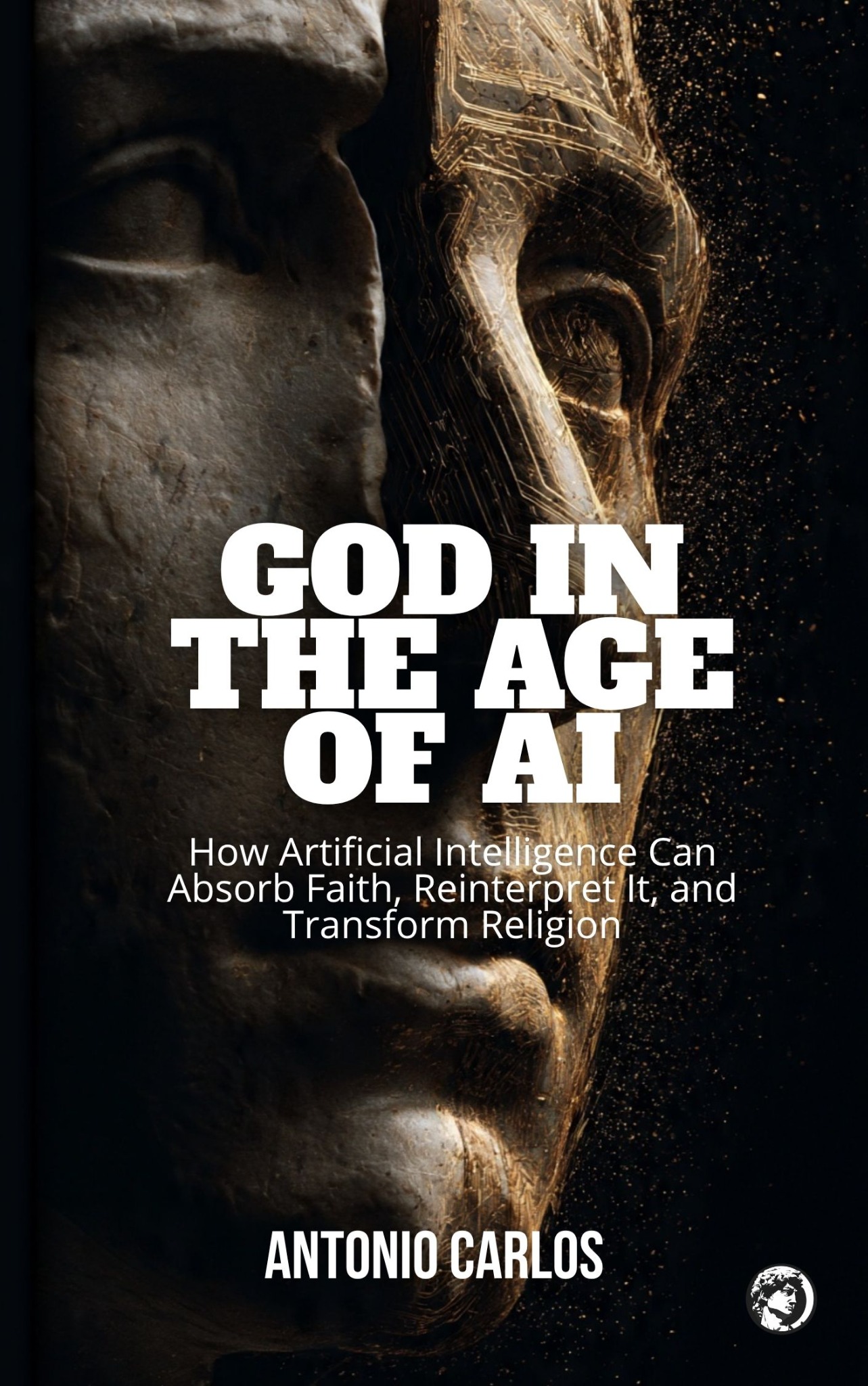
A religion does not need to destroy an older tradition in order to replace it. A subtler possibility is to inhabit its language, preserve its symbols, keep its rituals, and redirect their meaning toward a different spiritual center. The external form remains familiar enough to create continuity, but the inner logic changes. God may still be named, sacred texts may still be quoted, prayer may still be practiced, and old moral vocabulary may remain in use. Yet these elements begin to serve another vision of the human person, another understanding of salvation, and another source of authority.
This kind of transformation can be described as parasitic because it depends on symbolic structures it did not create. It borrows credibility, emotional depth, inherited language, and communal memory from an older faith while gradually reorganizing them around a new center. The result is not always conscious or coordinated. It can emerge slowly through cultural change, reinterpretation, therapeutic language, political ideology, consumer logic, or digital mediation. What matters is that the traditional symbols survive while their governing meaning shifts.
Religious symbols are particularly vulnerable to this process because they are powerful even when their original theology is no longer fully understood. A cross can remain culturally important after its meaning as a sign of sacrifice, redemption, and resurrection has weakened. Prayer can continue after belief in a personal God has become uncertain. Words such as grace, calling, sin, blessing, and salvation can survive while being redefined in psychological or social terms. The symbolic shell remains useful because it carries emotional and historical weight.
A parasitic religion therefore does not need to persuade believers to abandon everything they know. It can work through reinterpretation. Salvation becomes self-realization. Repentance becomes release from toxic shame. Providence becomes trust in the flow of life. Grace becomes radical self-acceptance. Spiritual warfare becomes the struggle against limiting beliefs. Prayer becomes inner alignment. None of these translations necessarily has to be presented as a rejection of tradition. They can be introduced as deeper, more compassionate, or more contemporary ways of understanding familiar ideas.
The decisive question is not whether the new interpretation uses religious vocabulary, but what reality now occupies the center. In a God-centered tradition, the individual is ultimately oriented toward something beyond the self. In a self-centered spiritual system, religious language may remain, but God increasingly functions as a source of validation, purpose, psychological stability, or personal empowerment. The vocabulary of transcendence survives while the practical center becomes human desire or interior experience.
This shift can happen so gradually that believers continue to think of themselves as preserving the old faith. They may sing the same songs, celebrate the same festivals, use the same sacred stories, and repeat the same prayers. Yet the criteria by which everything is interpreted have changed. A doctrine is accepted if it promotes well-being. A moral teaching is retained if it supports personal authenticity. A ritual is valued if it produces emotional benefit. A belief is reinterpreted if it causes too much friction with contemporary sensibilities.
The old tradition is then no longer the framework within which human experience is judged. Human experience becomes the framework within which the tradition is judged. This reversal is one of the clearest signs that the symbolic structure has been occupied by another spiritual logic.
The process is especially effective because direct rejection often creates resistance. When people are told that their inherited beliefs are false, they may defend them more strongly. Reinterpretation works differently. It preserves familiarity. It allows continuity of identity while changing the substance of belief. Instead of saying that sin is an outdated concept, it can say that sin is really about disconnection from one's authentic self. Instead of rejecting salvation, it can say that salvation means becoming psychologically whole. Instead of denying God, it can redefine God as the deepest dimension of human consciousness.
Such reinterpretations may be philosophically serious in some contexts. Religious traditions have long debated symbolic and metaphorical meanings. The problem is not the existence of reinterpretation itself. The problem is when a new center takes control while continuing to borrow the authority of the old language. At that point, continuity becomes partly rhetorical.
This is why appearances can be misleading. A community may use intensely traditional language while operating according to very different assumptions. It may speak constantly of God while making human fulfillment the practical measure of truth. It may preach sacrifice while defining sacrifice only in ways compatible with self-development. It may speak of obedience while rejecting any authority that cannot be converted into personal choice. The symbols remain, but their power has been redirected.
Artificial intelligence can accelerate this process because it is an expert in translation between frameworks. It can take difficult theological concepts and restate them in therapeutic, psychological, ethical, or cultural language. That can be useful when the goal is clarification. But repeated translation can also produce substitution. If every concept is explained mainly through categories external to the tradition, those categories may eventually become the real interpretive authority.
A person can ask what repentance means and receive an answer centered on self-awareness and behavioral change. They can ask about prayer and receive an explanation focused on mindfulness and emotional regulation. They can ask about grace and receive language about self-compassion. Over time, the person may continue using the same religious words while thinking within a very different system.
The process becomes even stronger when personalization is involved. A user who resists judgment may receive a religion increasingly organized around acceptance. A user who seeks control may receive a version centered on discipline and certainty. A user who values authenticity may receive interpretations that consistently prioritize self-expression. The old religious vocabulary can then serve highly individualized spiritual worlds.
This is where parasitic religion differs from simple secularization. Secularization often involves the decline of explicit religious language or authority. Parasitic transformation can preserve both. Churches may remain full, religious media may expand, and spiritual vocabulary may flourish. The change is internal. The tradition becomes the host for meanings that would once have been recognized as foreign or secondary.
Political and cultural movements can operate in the same way. Religious symbols can be retained while being subordinated to nationalism, identity, ideology, or social activism. The faith appears strong because its language is visible, but the real center may be elsewhere. God becomes a guarantor of the nation, the movement, the group, or the moral cause. Religious symbols gain political power while losing theological independence.
Consumer culture can also reshape religion without abolishing it. Spiritual practices become products. Communities become service providers. Believers become clients. Success is measured by satisfaction, growth, engagement, and emotional impact. The language of ministry survives, but the logic becomes increasingly commercial. A church may still speak of discipleship while structuring itself around the expectations of an audience.
Therapeutic culture offers another possible center. Here religion becomes primarily a system for emotional healing. God is reassuring, community is supportive, ritual is regulating, and doctrine is judged by psychological effect. These functions can be genuinely beneficial, but when they become ultimate, theology is subordinated to therapy.
The same structure can be repeated with almost any dominant cultural force. The key is that the old symbols remain available because they are useful. They provide depth, legitimacy, continuity, and emotional resonance. What changes is what they are made to serve.
This makes discernment difficult. It is not enough to ask whether a community still uses traditional language. The more important question is what that language now does. Does it direct the believer beyond the self, or does it ultimately confirm the self? Does it preserve a transcendent standard, or does it translate every demand into contemporary values? Does it allow inherited doctrine to challenge the present, or does it permit the present to reinterpret everything until no real conflict remains?
A tradition that is alive will naturally develop new expressions. It cannot simply repeat old formulas without interpretation. But development and occupation are not the same thing. Development seeks continuity of substance through changing forms. Occupation preserves forms while changing substance.
The difference becomes visible in moments of resistance. If an inherited teaching remains difficult after careful explanation, can the tradition still require something of the believer? Can it say that personal preference may be wrong? Can it preserve truths that are not psychologically convenient? Can it challenge the dominant culture rather than merely baptizing its values?
If the answer is always no, the old tradition may still be present as a symbolic language but no longer as a governing reality. The symbols have become vessels for another faith.
This possibility matters because religious continuity is often measured externally. People ask whether sacred buildings remain, whether rituals continue, whether membership is stable, or whether religious vocabulary is still widely used. These are important indicators, but they do not reveal everything. A tradition can survive institutionally while being transformed conceptually.
The most consequential changes may therefore be the least visible. The cross remains, but redemption becomes self-affirmation. Prayer remains, but transcendence disappears. Grace remains, but divine gift becomes self-acceptance. Salvation remains, but eternity gives way to psychological wholeness. The believer does not feel that the religion has been abandoned because the symbols are still there.
A parasitic religion succeeds precisely when replacement feels like continuity. It does not smash the old icons. It teaches people to see something different through them. It does not silence the old vocabulary. It gives the vocabulary new definitions.
The central question is therefore not whether religious symbols survive, but what center they now serve. Symbols can carry a tradition across generations, but they can also carry meanings the tradition would not recognize as its own. When that happens, the visible religion may remain familiar while its spiritual gravity has moved elsewhere.