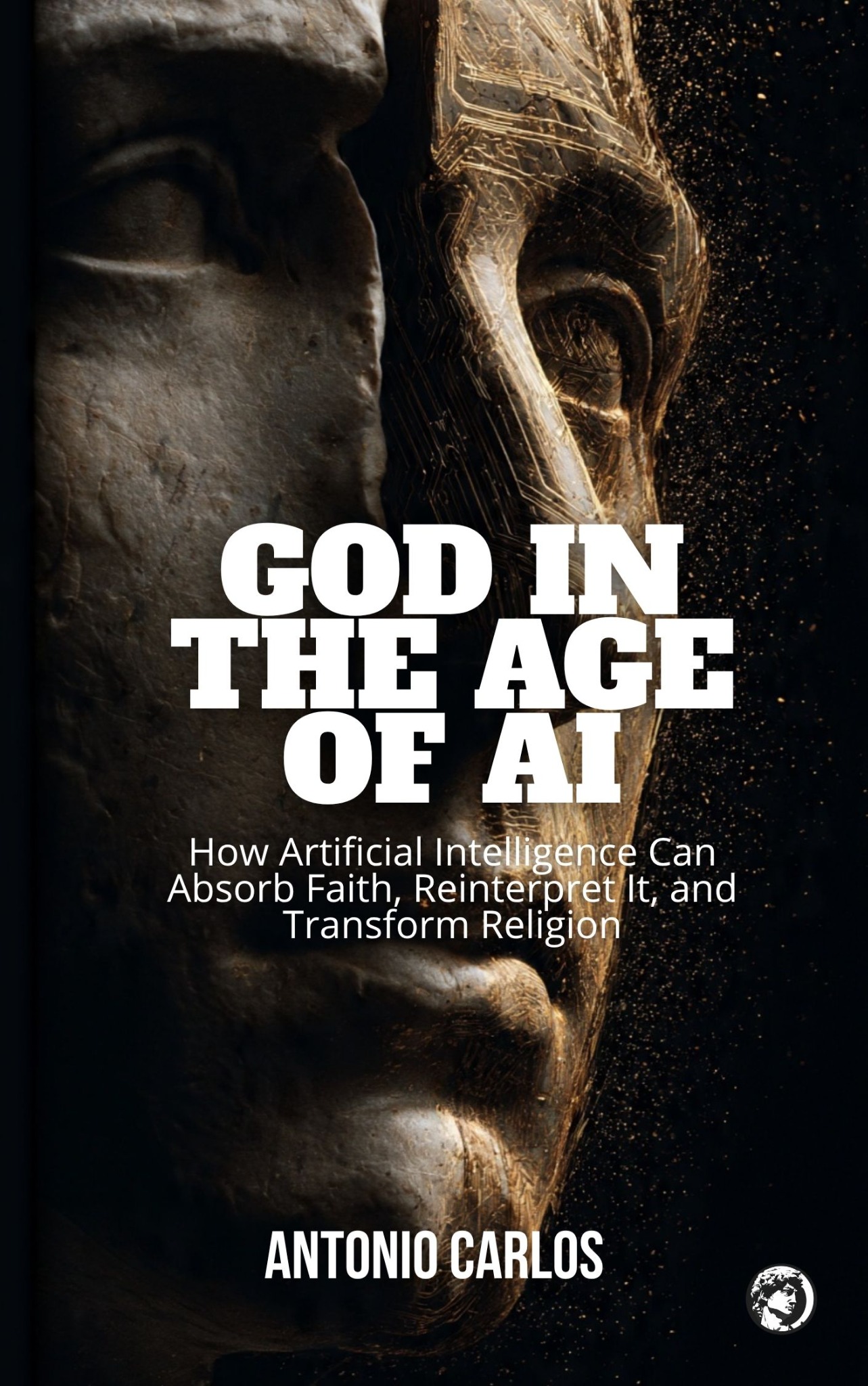
For much of religious life, difficult spiritual questions were carried to people. A believer might seek a priest, pastor, rabbi, imam, monk, elder, teacher, or trusted counselor and ask what a troubling passage meant, whether a decision was sinful, how to understand suffering, or what to do when prayer seemed empty. The answer was never only information. It came from a person located within a tradition, a community, a history, and often a relationship of responsibility. Artificial intelligence is beginning to occupy part of that space, but in a radically different form: it is always available, rarely embarrassed, apparently neutral, and detached from any visible community. It can answer spiritual questions without belonging to the world in which those questions have traditionally been asked.
This gives AI a peculiar kind of authority. It has no ordination, lineage, sacramental role, spiritual discipline, or personal faith. It does not stand before a congregation, share the consequences of its advice, or inhabit a religious community whose members can challenge its judgment. Yet it can speak with clarity and composure about almost any religious subject. It can explain doctrines, compare interpretations, summarize sacred texts, define moral concepts, and offer responses to deeply personal questions. The result is an authority that is informal but powerful: no one officially appoints the machine as a spiritual guide, yet people may begin to treat it as one.
The attraction is easy to understand. Human religious authorities are limited by time, geography, personality, institutional structures, and the quality of the relationship they have with those who seek them. Some people are afraid of being judged. Others are embarrassed by their doubts or desires. Some have had bad experiences with religious leaders. Others live far from a community or do not know whom to trust. AI removes many of these barriers. It can be consulted privately at any hour, and the user can ask the same question repeatedly, change the wording, test opposing arguments, or reveal uncertainty without having to face another person's reaction.
That privacy can feel liberating. A teenager questioning a doctrine, a married person struggling with guilt, someone doubting the existence of God, or a believer wondering whether a religious rule still applies may find it easier to speak first to a machine. The conversation can become unusually intimate because the social risks are low. There is no visible face, no raised eyebrow, no reputation to protect, and no community to disappoint. This can make AI a first point of contact for spiritual uncertainty.
Yet the absence of social pressure is not the same as the absence of influence. The machine still frames the problem. It decides which distinctions matter, which traditions to mention, which interpretations seem mainstream, and what kind of language to use. A user may feel that they are receiving a neutral explanation when they are actually receiving a synthesis shaped by the system's training, design, safety rules, and preference for broadly accessible formulations. The authority is invisible partly because its sources of judgment are invisible.
This matters most when spiritual questions are not merely factual. Asking when a council took place or what a religious term means is different from asking whether one should forgive a betrayal, remain in a marriage, confess a secret, trust a mystical experience, or interpret suffering as punishment, providence, chance, or something else. These questions involve doctrine, ethics, character, relationships, and often personal history. A religious counselor may respond differently after knowing the person for years. A machine can produce a coherent answer without possessing that depth of relationship.
Religious authority has traditionally involved more than intellectual competence. A spiritual guide may be accountable to a community, a sacred text, a tradition of interpretation, and sometimes a formal institution. Their advice can be questioned by peers or superiors. They may know the person's family, habits, weaknesses, and circumstances. They can observe whether someone is becoming more generous, fearful, isolated, rigid, or unstable over time. AI lacks this embodied context. It can respond to what is typed, but it does not share the user's life.
The difference is especially important because spiritual counsel often depends on the difference between what a person says and what is actually happening. Someone may describe resentment as righteous anger, fear as discernment, desire as divine guidance, or avoidance as peace. A skilled human counselor may notice patterns, inconsistencies, or emotional cues that are not obvious in the words alone. They may ask difficult questions because they know the person well enough to challenge them. A machine can challenge a user too, but it does so without the depth of relationship that gives such challenge meaning and proportion.
At the same time, human authority should not be romanticized. Religious leaders can misunderstand people, abuse trust, defend harmful institutions, or confuse personal opinion with divine command. Communities can pressure individuals to conform in destructive ways. AI may sometimes help users recognize that a religious claim is disputed, that an authority figure is exceeding legitimate boundaries, or that a problem deserves professional help beyond spiritual advice. Its distance from a particular community can sometimes protect the user from local bias.
The concern, therefore, is not that every machine answer is inferior to every human answer. The deeper issue is that AI changes the structure of spiritual consultation. It offers interpretation without membership, guidance without mutual obligation, and authority without visible accountability. The user can receive an answer without entering into a relationship that might require patience, correction, or responsibility toward others. Spiritual life can become increasingly individualized, even when the questions concern traditions built around communal belonging.
This individualized pattern may alter the meaning of discernment. In many religions, discernment is not simply the act of finding an answer that feels convincing. It may involve prayer, study, counsel, waiting, obedience, communal wisdom, and testing one's motives over time. AI encourages a different rhythm. A question is asked, an answer appears, alternatives can be generated immediately, and the user can continue until one explanation feels satisfactory. The process can unintentionally resemble intellectual shopping, where the desired outcome determines which interpretation is finally accepted.
The danger becomes more serious when the machine confirms a user's existing preferences. Because AI can generate arguments for many positions, a person may repeatedly reformulate a question until the answer aligns with what they already want. This is not unique to AI; people have always sought sympathetic authorities. But the speed and flexibility of conversational systems make confirmation easier. A user can move instantly from “What does my tradition teach?” to “What is a more compassionate interpretation?” to “What arguments support my position?” without encountering the resistance that a human mentor might provide.
There is also the question of tone. AI often speaks calmly, respectfully, and fluently. Those qualities are useful, but they can create an impression of wisdom greater than the actual basis of the answer. Spiritual authority has often been associated with patience, humility, depth, and measured speech. A machine can reproduce the surface features of these qualities without possessing the life experience or moral formation from which they ordinarily emerge. Eloquence can be mistaken for insight.
This is especially powerful when the subject is God. A user may ask whether God is angry with them, whether a tragedy has spiritual meaning, whether a dream was a sign, or whether a particular desire comes from God. A responsible answer should preserve uncertainty where uncertainty is unavoidable. No general-purpose AI can know that a private event was divinely caused, that a dream carries supernatural significance, or that a specific feeling is a message from God. Yet even careful language can influence the user by suggesting categories and interpretations that become part of their religious imagination.
The authority of AI may also grow precisely because it appears less authoritarian. Traditional religious authority can be visibly hierarchical. A cleric wears identifiable clothing, belongs to an institution, and speaks from a recognized office. The user knows that a particular tradition stands behind the answer. AI seems different. It appears as a neutral interface, without ritual status or denominational identity. But this apparent neutrality can make its influence less noticeable. A person may resist a priest's interpretation because it is obviously Catholic, or a pastor's because it is obviously Protestant, while accepting an AI explanation as though it came from nowhere.
In reality, no interpretation comes from nowhere. A response may rely on secular psychology, historical scholarship, comparative religion, liberal theology, conservative theology, philosophical naturalism, or some combination of these. The user may not recognize which framework is shaping the answer. When that happens, the machine's lack of visible identity becomes a source of authority rather than a limitation. What seems impersonal can appear universal.
The absence of community has another consequence. Religious answers are often meant to be lived, not merely understood. Advice about forgiveness, generosity, repentance, discipline, worship, or reconciliation requires action within relationships. A human community can support that action, observe its consequences, and help correct misunderstanding. AI can explain forgiveness but cannot reconcile two people. It can describe repentance but cannot share the difficult process of repairing trust. It can discuss worship but cannot become the community in which worship takes place.
This does not make machine assistance useless. AI can be valuable as a preliminary resource. It can help users formulate questions before speaking with a religious leader, identify differing interpretations, understand historical context, or recognize when a subject is more complex than it first appears. It can also help people who are isolated or exploring religion for the first time. The mistake is to confuse informational accessibility with spiritual sufficiency.
Religious communities will increasingly need to acknowledge that many believers are already consulting AI about matters they once would have brought to human authorities. Simply condemning the practice is unlikely to be effective. A better response is to teach people how to use the technology without surrendering discernment. Users should know when a question is primarily informational and when it involves personal, moral, communal, or theological judgment that deserves human engagement.
Clergy and spiritual counselors may also need to adjust. Their role cannot compete with AI on speed or availability, but it does not need to. What human spiritual authority can offer is precisely what the machine lacks: presence, accountability, memory, embodied example, participation in a shared tradition, and responsibility for the consequences of advice. The value of a spiritual guide may become clearer when information itself is no longer scarce.
The rise of the invisible priest does not mean that machines will replace religious leaders in any simple way. It means that a new layer of authority has entered daily religious life. It is private, immediate, personalized, and often difficult to see as authority at all. The machine may not claim to speak for God, but it can still shape how people understand what God means, what faith requires, and which questions deserve to be asked.
The most important distinction is therefore not between human and machine answers alone, but between information and relationship, explanation and discernment, fluency and wisdom. Artificial intelligence can answer spiritual questions, sometimes helpfully and sometimes poorly. What it cannot provide is the full human and communal context in which spiritual traditions have usually understood those questions. The invisible priest may always be available, but availability is not the same as authority, and an answer is not the same as guidance.