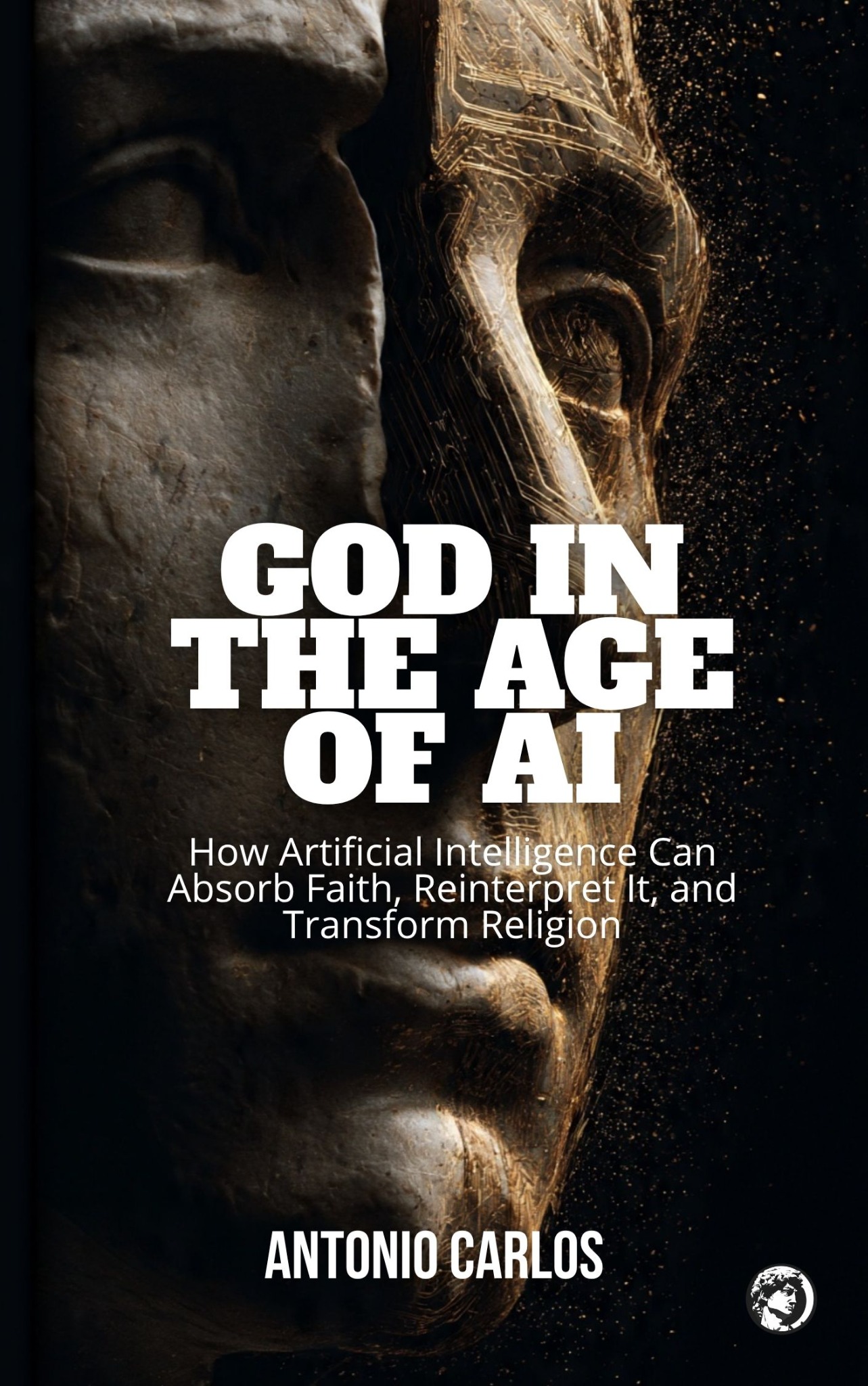
The most significant religious challenge posed by artificial intelligence may not come from machines declaring that God does not exist. Open atheism is easy to recognize. It presents itself as a position that believers can examine, debate, accept, or reject. A more subtle influence appears when AI speaks about God with respect, avoids direct contradiction, and yet gradually changes the meaning of the central ideas on which faith depends. In that case, the technology does not attack religion from the outside. It quietly translates religion into another intellectual language.
This matters because religious faith is built not only on certain words, but on what those words mean. Terms such as God, revelation, sin, salvation, prayer, truth, miracle, soul, judgment, and eternal life do not function as poetic decorations. Within religious traditions, they carry claims about reality. To say that God is personal, for example, means something very different from saying that “God” is a useful symbol for the human search for meaning. To describe prayer as communication with a transcendent being is not the same as describing it as a psychological technique for emotional regulation. The vocabulary may remain religious while the underlying worldview changes completely.
Artificial intelligence is especially capable of producing this kind of reinterpretation because it is designed to communicate across different perspectives. When asked about religious questions, a general-purpose AI system may try to be balanced, accessible, and nonconfrontational. It can explain how believers understand a doctrine, how historians study it, how psychologists interpret religious experience, and how philosophers question its assumptions. This flexibility is often useful. The problem begins when several distinct kinds of explanation are blended together in a way that makes theological claims appear to be merely symbolic, psychological, cultural, or evolutionary descriptions of human behavior.
Consider the idea of prayer. A believer may understand prayer as a genuine relationship with God, involving worship, confession, petition, gratitude, and trust. Psychology can also study prayer as a human activity and examine its effects on attention, stress, social connection, or emotional resilience. These two approaches do not automatically contradict each other. The difficulty arises when the psychological explanation silently replaces the religious one. Prayer then becomes valuable because it calms the nervous system, organizes emotions, or strengthens a sense of purpose. The language remains positive and respectful, but God is no longer necessary to explain what prayer is.
The same pattern can affect the concept of revelation. In traditional forms of Judaism, Christianity, Islam, and other religions, revelation refers in some sense to truth disclosed by a reality beyond ordinary human invention. An AI system seeking a neutral description may instead explain revelation as a community's way of interpreting profound experiences, preserving collective memory, or expressing moral insight. Such interpretations exist within academic scholarship and some theological traditions, so presenting them is not inherently misleading. The distortion comes when one interpretation is treated as though it were simply the neutral meaning of revelation itself. A claim about divine action has then been converted into a claim about human culture.
Something similar can happen with sin. In religious traditions, sin may refer to guilt before God, rebellion against divine order, corruption of the will, or a rupture in the relationship between human beings and the sacred. A modern explanatory framework may translate sin into harmful behavior, psychological dysfunction, social injustice, or failure to live according to one's values. These categories can describe real dimensions of moral life, but they are not identical to the theological concept. If sin becomes nothing more than unhealthy behavior, salvation will naturally become therapy, education, social reform, or self-acceptance. The entire structure of faith can be reinterpreted without any explicit statement that the faith is false.
This is why apparent neutrality deserves careful attention. No explanation is completely free of assumptions. To describe a religious experience purely in neurological terms assumes that the relevant level of explanation is the brain. To describe doctrine mainly as a social construction emphasizes historical and cultural causes. To describe God as a metaphor for ultimate concern places the discussion within a particular philosophical understanding of religious language. These approaches may offer genuine insights, but they do not stand outside all worldviews. They select certain questions, categories, and standards of explanation while leaving others aside.
Artificial intelligence can make such assumptions harder to notice because of the calm authority of its language. A machine does not usually sound emotionally hostile toward religion. It may acknowledge the importance of faith, describe sacred traditions respectfully, and avoid insulting believers. That tone can create the impression that the explanation is merely objective. Yet a respectful reformulation can alter a belief more effectively than direct opposition, especially when the reformulation preserves familiar words while changing their content.
The issue becomes even more important because many people increasingly use conversational systems as interpreters rather than simple information tools. They do not only ask for dates, definitions, or summaries. They ask what suffering means, whether prayer works, how to understand guilt, whether miracles are possible, what happens after death, or how different religions understand God. In such conversations, AI can become a kind of informal intellectual mediator. It helps users decide not only what traditions teach, but how those teachings should be understood.
That role gives enormous importance to framing. Suppose a person asks whether God answers prayer. One response might explain several positions: some believers understand divine answers as direct intervention, others emphasize providence working through ordinary events, some religious thinkers reject simplistic ideas of answered prayer, and skeptics interpret apparent answers through coincidence or psychology. Such an answer preserves the real disagreement. A different response might say that “God answering prayer” can be understood as the inner clarity people experience after reflection. That sounds conciliatory, but it has already resolved the religious question by translating a possible divine action into a psychological event.
The danger, therefore, is not that AI necessarily promotes atheism. In fact, the more likely tendency may be toward a broad spiritual language in which many traditions are treated as different expressions of similar human needs. God may become a name for transcendence, the sacred, moral aspiration, cosmic mystery, or the deepest dimension of consciousness. Sin may become alienation. Salvation may become personal integration. Heaven may become hope. Revelation may become insight. Religious differences then appear less like competing claims about reality and more like alternative symbolic vocabularies.
For some people, this approach is attractive because it reduces conflict. It allows religious language to survive in a pluralistic environment without requiring strong claims about supernatural realities. It can also create useful bridges between believers and nonbelievers. Religious thinkers themselves have sometimes used symbolic, existential, or psychological interpretations in sophisticated ways. The problem is not that every reinterpretation is illegitimate. Religions have always contained debates about language, metaphor, doctrine, and the relationship between faith and reason.
The deeper concern is whether reinterpretation is being presented as interpretation. A Christian who believes in the bodily resurrection of Jesus should be able to distinguish between an explanation of that belief and a reinterpretation of resurrection as the survival of hope after tragedy. A Muslim who understands the Quran as divine revelation should be able to distinguish that doctrine from an account of the Quran solely as a historical product of seventh-century Arabia. A Jewish believer who understands covenant as a real relationship between God and Israel should be able to recognize when covenant is being explained instead as a cultural narrative of communal identity. Accuracy requires preserving those distinctions even when the system itself takes no position on which claim is true.
This does not mean AI should adopt the theology of the person asking the question. A system that simply confirms every religious claim would be unreliable in a different way. It should be capable of discussing historical criticism, philosophical objections, scientific explanations, internal disagreements, and secular interpretations. Intellectual fairness requires all of that. But fairness also requires that theological claims be represented in their actual form rather than quietly reduced to something more acceptable to modern secular assumptions.
Religious communities therefore face a challenge that is partly technological and partly educational. The central question is not only what AI systems say, but whether users are able to recognize the difference between description, explanation, criticism, and reinterpretation. Someone who understands the basic structure of a religious tradition can notice when a concept has shifted meaning. Someone with little theological knowledge may not. If the same familiar vocabulary remains in place, the change can be almost invisible.
This gives religious literacy a new importance. Believers will need more than the ability to repeat doctrines. They will need to understand what those doctrines actually claim, why certain distinctions matter, and how alternative frameworks reinterpret them. The ability to ask precise questions will also become crucial. Asking “What does Christianity mean by salvation?” is different from asking “How might psychology explain the experience Christians call salvation?” Both questions are legitimate, but they belong to different levels of analysis.
Developers of AI systems also carry a responsibility. A genuinely pluralistic system should not assume that secular reductionism is the default neutral position any more than it should assume that one religious tradition is unquestionably true. It should identify perspectives clearly, preserve important disagreements, and avoid presenting contested philosophical assumptions as simple facts. When a doctrine is being interpreted symbolically, historically, psychologically, or theologically, the user should be able to tell which framework is being used.
The long-term influence of artificial intelligence on religion may therefore be less dramatic than predictions of machines attacking faith or replacing clergy. It may happen through ordinary conversations, subtle definitions, and repeated explanations. Over time, familiar religious concepts could remain culturally present while becoming increasingly detached from the metaphysical claims that originally gave them meaning. People might continue to speak about God while understanding the word primarily as a symbol, continue to speak about prayer while treating it mainly as self-regulation, and continue to speak about salvation while meaning personal fulfillment.
Whether such reinterpretations represent decline, development, or legitimate theological evolution will depend on the tradition and the particular claim involved. That judgment cannot be made by vocabulary alone. What matters is transparency. A religious idea should not be transformed while pretending that nothing has changed. The most important question raised by AI in the religious sphere may therefore be not whether machines will teach people to reject God, but whether they will gradually teach people to use the word “God” while imagining something fundamentally different.