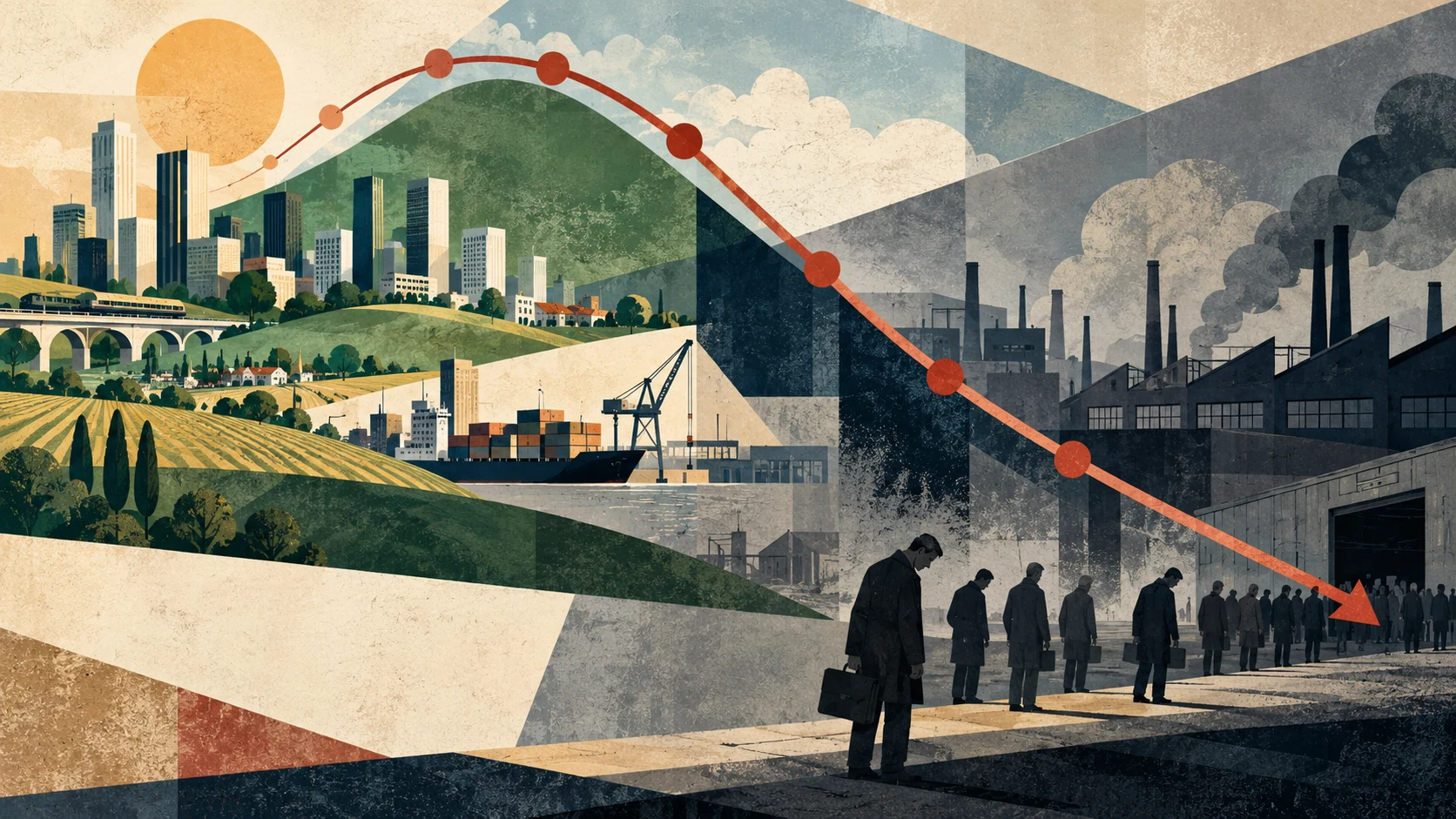
Economies do not grow at a perfectly steady pace. Periods of expanding production and employment are regularly interrupted by slowdowns or recessions. A recession is a broad decline in economic activity that affects businesses, households, employment, investment, and income. Recessions do not have a single universal cause. They usually emerge from interactions among spending, credit, investment, expectations, financial conditions, and shocks to the economy.
Household consumption is a major part of economic activity. When consumers become more cautious, businesses experience weaker sales. Companies may respond by reducing production, delaying hiring, or cutting investment. Workers who lose income then reduce their own spending, creating additional weakness.
This is one way an initial slowdown can spread. A decline in spending at one business becomes a decline in income for employees and suppliers. Those households and companies then reduce their own purchases, affecting other firms. Economists describe these chains of effects through the concept of multipliers.
Investment is often even more volatile than consumption. Businesses invest when they expect future demand to justify new factories, equipment, software, buildings, or expansion. If expectations deteriorate, many investments can be postponed immediately.
The sensitivity of investment makes it a powerful driver of business cycles. A company can continue operating its existing factory while delaying a planned expansion. When thousands of businesses make similar decisions, demand for construction, machinery, technology, and professional services can fall sharply.
Credit conditions can amplify the process. Many households and companies rely on borrowing to finance purchases and investment. If banks become more cautious or interest rates rise, credit becomes more expensive or difficult to obtain. Spending can then decline even among people or firms that still want to borrow.
Financial crises can produce especially severe recessions because they disrupt the system that connects savers and borrowers. Banks facing losses may reduce lending, while businesses become uncertain about access to finance. Falling asset prices can weaken household wealth and corporate balance sheets.
Debt can make downturns worse. During prosperous periods, households and companies may become comfortable carrying larger debts. If income later falls, borrowers may need to cut spending to continue making payments. When many people try to reduce debt simultaneously, economic demand can decline substantially.
Expectations and confidence also influence the cycle. A business may postpone hiring because managers expect weaker sales. Consumers worried about job security may increase savings. These decisions can be individually reasonable while collectively deepening the slowdown.
This creates feedback loops. Weak demand reduces hiring, lower employment weakens income, weaker income reduces spending, and lower spending further reduces demand. The economy can therefore contract even after the original cause has faded.
Recessions can also begin with supply shocks. A major increase in energy prices, natural disaster, war, or disruption to essential production can reduce the economy's ability to produce. This can create the difficult combination of weaker activity and higher prices.
Pandemics and other public-health crises can affect both supply and demand. Workers may be unable to work, supply chains can break, consumers may avoid certain services, and governments may impose restrictions. The result differs from a conventional recession but can still involve sharp declines in output and employment.
Monetary policy can influence recessions as well. Central banks often raise interest rates when inflation is too high. Higher rates reduce borrowing and can cool housing, consumption, and business investment. If financial conditions tighten strongly enough, economic activity may contract.
This does not mean that central banks deliberately seek recessions. Their goal is usually to slow demand enough to control inflation without causing an unnecessarily deep downturn. The challenge is that policy works with delays and the strength of the response is uncertain.
Asset-price bubbles can contribute to recessions when they collapse. Rising property or stock prices may encourage borrowing, spending, and investment during the boom. When prices fall, wealth declines and debts remain, forcing painful adjustments.
The housing market can be especially important because homes are large assets and construction supports many industries. A property downturn can affect banks, builders, suppliers, local governments, and household spending simultaneously.
International connections can transmit recessions between countries. A decline in demand in one major economy can reduce exports elsewhere. Financial stress can cross borders through banks and investors. Commodity-producing countries can be hit when global prices fall.
Not every slowdown becomes a severe recession because economies contain stabilizing forces. Lower prices in some markets can support demand. Businesses eventually reduce inventories. Interest rates may fall. Governments may increase spending or reduce taxes. Central banks may ease financial conditions.
Labor markets can also adjust. Firms may initially reduce overtime or hiring before cutting large numbers of jobs. When demand begins to recover, businesses can increase hours and hiring again.
Fiscal policy is another stabilizer. Unemployment benefits and progressive taxes automatically support household income during downturns. Governments may also adopt temporary stimulus measures, infrastructure programs, transfers, or tax reductions.
Recovery often begins before conditions feel strong. Businesses may notice that inventories are low, consumers gradually resume spending, financial markets stabilize, and confidence improves. Companies then begin hiring or investing again, creating positive feedback instead of contraction.
Business cycles therefore involve interactions rather than isolated events. Consumption affects business revenue, revenue influences hiring and investment, employment affects household income, credit influences spending, and expectations shape nearly every decision.
A recession can begin with a financial crisis, a policy tightening, an external shock, falling investment, or a collapse in confidence. What turns the initial problem into a broad downturn is the way these forces reinforce one another.
Understanding recessions therefore requires looking beyond the first event. The key question is how the shock changes spending, income, credit, employment, and expectations across the economy. Downturns become severe when negative feedback loops strengthen, and recoveries become durable when those loops reverse.