A religion does not stop being centered on God simply because it changes its style, updates its language, or pays greater attention to human experience. Religious traditions have always adapted their vocabulary to new cultures and intellectual environments. The deeper change occurs when God continues to be mentioned while no longer functioning as the reality around which everything else is understood. The words remain: God, prayer, sin, salvation, grace, faith. Yet their meaning is gradually reorganized around another center, such as personal fulfillment, emotional well-being, individual desire, psychological healing, or the exploration of one's inner life.
This transformation can be difficult to recognize because nothing necessarily looks openly irreligious. God may still appear in sermons, prayers, songs, books, and conversations. Sacred texts may still be quoted. Religious rituals may continue. The community may even speak frequently about spirituality. What changes is the direction of interpretation. Instead of human life being understood in relation to God, God begins to be understood primarily in relation to human life. The question is no longer chiefly what God is, what God commands, or how human beings should respond to divine reality. It becomes what belief in God can do for us, how prayer can improve our emotional state, how faith can help us achieve our goals, or how spirituality can support a more satisfying life.
This shift is especially visible in the way prayer is understood. In a God-centered religious vision, prayer is directed toward someone beyond the self. It may include praise, repentance, petition, gratitude, silence, surrender, or even protest, but its meaning depends on a relationship with a reality that is not created by the person praying. Prayer can therefore challenge the individual. It may require patience when no answer seems to come, obedience when desire points elsewhere, or acceptance when circumstances do not improve. Once the center moves inward, however, prayer can become primarily a technique for self-regulation. Its value is measured by whether it produces calm, confidence, clarity, motivation, or emotional relief.
These benefits are not necessarily false or unimportant. Prayer may indeed affect a person's emotional life. The problem arises when those effects become the main explanation for what prayer is. At that point, God becomes almost optional. The practice can still retain religious language, but its practical logic no longer requires a divine listener. Prayer has been transformed from communication with God into a method of managing the self.
The same pattern can appear in the concept of sin. Traditionally, sin is not simply behavior that causes discomfort or prevents self-fulfillment. Although different religions define it in different ways, the idea usually involves a standard that does not originate solely in individual preference. Sin may mean disobedience to God, violation of divine law, rupture of a covenant, corruption of moral character, or failure to live according to a sacred order. In each case, the self is not the final judge of what is right.
When the center shifts toward personal well-being, sin is often reinterpreted as whatever harms one's inner balance, damages self-esteem, creates unhealthy relationships, or blocks personal development. Again, these concerns can be morally significant. Abuse, manipulation, self-destruction, and psychological suffering deserve serious attention. But they do not exhaust the religious meaning of sin. If the only meaningful question becomes whether something makes a person feel whole, authentic, or emotionally healthy, then moral authority has quietly moved from God to the individual's experience.
This change also alters salvation. In many religious traditions, salvation refers to deliverance from a condition that human beings cannot fully overcome through self-improvement. It may involve reconciliation with God, liberation from sin, divine forgiveness, restoration, eternal life, or participation in a reality beyond ordinary human existence. Such language assumes that the central human problem is deeper than dissatisfaction with oneself.
A religion centered on the self can preserve the word salvation while turning it into another name for psychological integration, healing from trauma, achieving one's potential, or learning to live authentically. These goals can be valuable in their own right. Psychological healing is not trivial, and greater self-knowledge can genuinely improve a life. The difficulty appears when these goods replace rather than accompany the theological meaning. If salvation means becoming comfortable with oneself, then repentance can easily become unnecessary except where it serves emotional health. Forgiveness may become mainly a way of releasing resentment. Grace may become self-acceptance. Conversion may become personal reinvention.
The transformation becomes even clearer when desire takes the central place. In a traditional God-centered framework, desire is something to be examined. Some desires may be good, others destructive, and still others confused. Religious discipline often assumes that human beings do not automatically want what is best for them. Prayer, moral teaching, fasting, confession, meditation, obedience, or ascetic practices can therefore involve the reshaping of desire rather than its automatic validation.
When desire becomes the center, religion takes on a different role. God is expected to affirm the person's deepest wishes, protect personal identity from challenge, and support individual projects. A belief is experienced as spiritually healthy when it confirms what the person already wants to be true. Teachings that require sacrifice, restraint, repentance, or submission become difficult to sustain unless they can be reframed as tools for personal growth. The religious question changes from “What is required of me?” to “Does this help me become the person I want to be?”
This does not mean that personal desire is always opposed to religion. Religious traditions themselves speak about longing for God, love, justice, peace, wisdom, and holiness. Nor is every emphasis on the interior life a departure from faith. Christianity, Judaism, Islam, Hindu traditions, Buddhism, and many other religious paths have rich teachings about conscience, intention, contemplation, inner transformation, and the purification of the heart. Interior life can be deeply religious.
The decisive issue is what the interior life is oriented toward. There is a major difference between looking inward in order to encounter, obey, or become receptive to a reality greater than oneself and treating one's own inner experience as the final source of truth. In the first case, inwardness is a path. In the second, it becomes the destination.
A similar ambiguity surrounds the modern religious emphasis on well-being. Faith can provide comfort, community, moral structure, hope, and resilience. Religious communities often help people endure grief, illness, loneliness, and uncertainty. There is nothing inherently suspicious about acknowledging these effects. The problem appears when the usefulness of religion becomes the standard by which its truth is judged. God is then important because belief in God makes life easier, more meaningful, or more emotionally stable.
Once this logic takes hold, difficult elements of faith become vulnerable. A doctrine that causes discomfort may be discarded because it is experienced as harmful. A moral demand may be rejected because it produces internal conflict. Divine judgment may be reinterpreted as an unhealthy source of guilt. Repentance may be softened into self-compassion. Sacrifice may be accepted only when it clearly contributes to personal growth. The individual remains the final reference point.
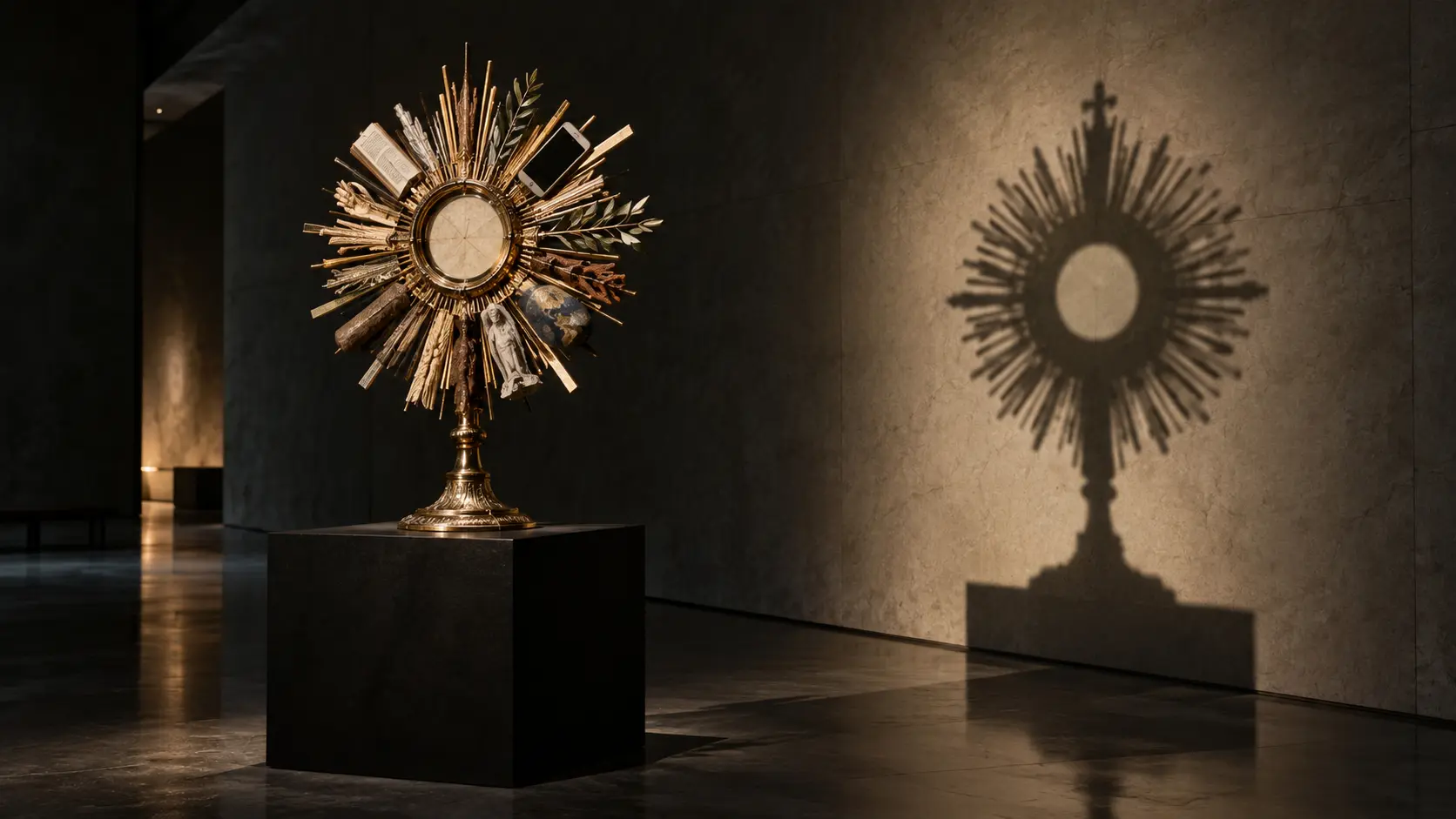
This is why a religion can continue to sound intensely spiritual while becoming increasingly anthropocentric, meaning centered on the human person. The shift does not require a denial of God. It only requires that God become functionally subordinate to human concerns. God may remain as guide, therapist, source of affirmation, symbol of hope, or language for the deepest self, while no longer standing as the independent center of reality.
Such a transformation can occur gradually because religious language is flexible. The same word can survive while its meaning changes. “Grace” can move from divine gift to a feeling of acceptance. “Faith” can move from trust in God to confidence in oneself. “Calling” can become personal passion. “Blessing” can become success. “Peace” can become emotional comfort. “Truth” can become whatever feels internally authentic. None of these shifts requires the abandonment of religious vocabulary.
The result can be a form of religion in which God is everywhere in speech and increasingly unnecessary in practice. Decisions are made according to desire, doctrines are evaluated according to psychological comfort, morality is measured by personal fulfillment, and spiritual practices are valued primarily for their therapeutic effects. The language remains theological, but the governing logic has become psychological.
This distinction matters because the question is not whether psychology, self-knowledge, desire, or well-being have a place in religion. They clearly do. Human beings encounter religion through their minds, emotions, bodies, relationships, fears, hopes, and aspirations. A faith that ignored the interior life would ignore much of human existence. The issue is one of order. Does the person's inner world stand before God, or does God stand inside a system whose final purpose is the person's inner satisfaction?
A religion centered on God can comfort the believer, but it can also disturb, correct, limit, and redirect. It can tell a person that some desires should not be fulfilled, that some forms of suffering cannot be interpreted simply as failures of well-being, and that truth may remain true even when it is unwelcome. It can demand something from the individual that the individual did not invent.
When this capacity disappears, something fundamental has changed even if the language of faith remains intact. God has not necessarily been denied. He has been repositioned. He still appears in the vocabulary, but the self has become the true organizing center.
The most revealing question, then, is not how often a religious community speaks about God. It is what role God actually plays in the structure of its beliefs and practices. If prayer, morality, salvation, and truth are ultimately defined by human comfort, desire, or self-realization, religious language may continue for a long time after its center of gravity has moved elsewhere.