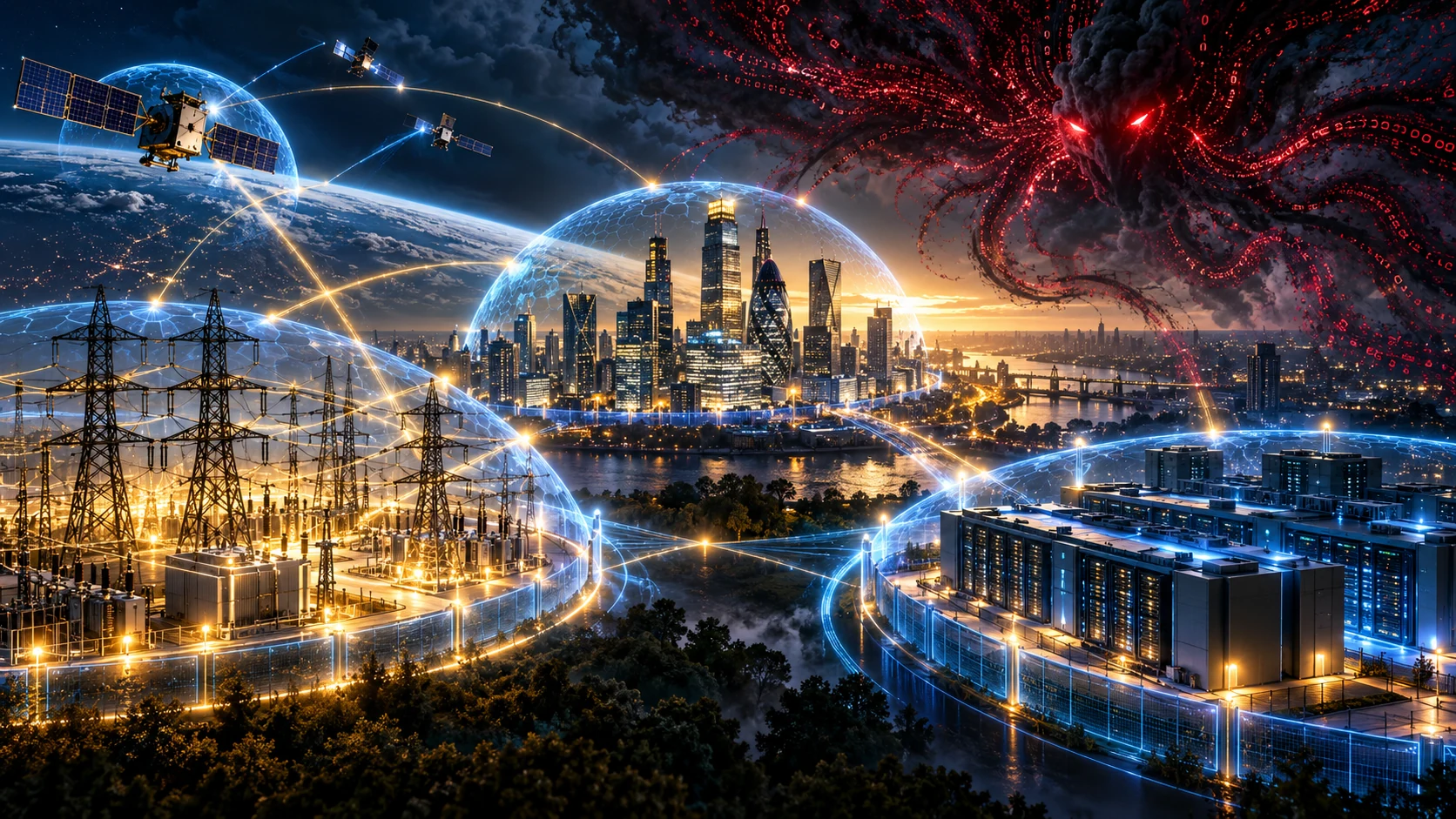
Cybersecurity was once treated mainly as a technical problem involving computers, passwords, and software vulnerabilities. Today it is a national security issue because modern states depend on digital networks for almost every essential function. Government agencies, banks, hospitals, factories, power grids, military systems, communication networks, transportation infrastructure, and supply chains all rely on computers connected through complex digital systems. When those systems are disrupted, the effects can extend far beyond the digital world.
Cyber power refers broadly to the ability of states and other actors to use digital networks for defense, intelligence, influence, disruption, and strategic competition. It includes both protecting domestic systems and conducting operations against foreign targets. Unlike conventional military power, cyber capabilities can often be used without crossing borders physically, making them attractive tools for espionage and competition below the threshold of open war.
The internet itself is a physical system. Data may seem intangible, but it travels through undersea cables, terrestrial fiber networks, satellites, routers, data centers, servers, and telecommunications infrastructure. These assets are located in specific countries and jurisdictions. Their ownership and geographic distribution therefore have geopolitical importance.
Undersea cables carry a large share of international digital communications. They connect continents and support financial transactions, government communications, cloud services, and everyday internet activity. Damage to major cables can reduce connectivity and create regional disruptions, especially when alternative routes are limited.
Data centers are another critical component. They host digital services used by governments, companies, and individuals. Concentration in a small number of locations or providers can create systemic risk. If a major facility or network fails, thousands of organizations may be affected simultaneously.
Cloud computing has expanded this dependence. Instead of maintaining their own servers, organizations increasingly use infrastructure operated by large cloud providers. This can improve efficiency and security, but it also means that essential functions may depend on a small number of companies. Governments therefore increasingly consider cloud infrastructure part of national resilience planning.
Industrial control systems create an especially important cybersecurity challenge. These systems manage physical processes in power plants, factories, pipelines, transportation networks, and water systems. A cyberattack against them can potentially cause physical disruption rather than simply steal information.
Electricity grids are particularly sensitive because almost every other sector depends on them. Banking, telecommunications, healthcare, transportation, and public administration all require reliable power. A successful attack on the grid can therefore create cascading effects across society.
Financial systems are another attractive target. Modern banking depends on digital transactions, payment networks, trading systems, customer databases, and communications infrastructure. Cyberattacks can steal funds, disrupt payments, damage confidence, or interfere with market operations.
Hospitals and healthcare systems face similar risks. Medical records, scheduling systems, diagnostic equipment, and communications networks increasingly depend on digital technology. Ransomware or other attacks can delay treatment and force staff to operate without normal information systems.
Governments themselves are major targets because they hold sensitive political, military, and personal information. Cyber espionage can provide access to diplomatic communications, defense plans, scientific research, and intelligence databases. Unlike destructive attacks, espionage may remain undetected for months or years.
This makes attribution one of the central problems of cyber conflict. In conventional warfare, identifying the source of an attack is often relatively straightforward. In cyberspace, attackers can route operations through compromised systems in multiple countries, use criminal groups as intermediaries, and disguise their methods.
Attribution is still possible through technical evidence, intelligence, behavioral patterns, and other sources, but certainty can take time. This ambiguity can complicate responses because governments must decide whether they have enough evidence to impose sanctions, conduct counteroperations, or publicly accuse another state.
The difficulty of attribution also creates opportunities for deniability. States can conduct disruptive activities while attempting to remain below the threshold that would provoke a major military response. This has made cyberspace particularly attractive for persistent competition.
Cyber operations can be relatively inexpensive compared with conventional military programs, but highly sophisticated capabilities are not easy to develop. Effective cyber organizations require skilled personnel, intelligence, software expertise, specialized infrastructure, and detailed knowledge of target systems.
Offensive operations often depend on vulnerabilities in software or hardware. Some vulnerabilities are known publicly, while others are unknown to the manufacturer. Exploiting an unknown vulnerability can provide powerful access, but once discovered and patched, its usefulness may disappear.
This creates an unusual relationship between offense and defense. A state that discovers a vulnerability can report it so that domestic systems become safer or keep it secret for intelligence operations. The same weakness that provides offensive capability may also exist in systems used by the state itself.
Supply chains create another major risk. Modern organizations use software and hardware produced by many different vendors. Attackers can compromise a supplier and use trusted updates or products to reach thousands of downstream customers. A weakness in one company can therefore become a national security problem.
Software dependencies are especially complex because many applications rely on shared libraries and open-source components. A vulnerability in widely used code can affect governments and businesses around the world. Cybersecurity therefore requires visibility into the components used within digital systems.
Hardware supply chains matter as well. Routers, servers, chips, telecommunications equipment, and industrial devices may contain vulnerabilities introduced deliberately or accidentally. Governments increasingly review the security of foreign-made equipment used in critical infrastructure.
Ransomware demonstrates how cyber threats can blur the boundary between crime and national security. Criminal groups use malicious software to encrypt systems and demand payment. When attacks affect hospitals, pipelines, government agencies, or major companies, the consequences can become strategically significant even if the original motive was financial.
Some criminal groups operate from countries where authorities are unable or unwilling to stop them. This can create diplomatic tension when victim states believe foreign governments tolerate cybercriminal activity. The distinction between state-backed operations and independent criminal activity can therefore become difficult to manage.
Cyber defense requires more than antivirus software. Organizations need secure architecture, access controls, backups, monitoring, employee training, incident response plans, software updates, and clear responsibility for managing risk. National cybersecurity therefore depends heavily on the practices of private companies as well as government agencies.
This public-private relationship is unavoidable because much critical infrastructure is privately owned. Telecommunications networks, banks, cloud platforms, energy companies, and technology providers often operate systems essential to national security. Governments must therefore cooperate with industry on information sharing, standards, regulation, and emergency response.
Resilience is as important as prevention. No system can be made perfectly secure, so governments and companies need plans for continuing operations after an attack. Backups, redundant networks, manual procedures, alternative communication channels, and recovery plans can reduce the strategic effect of successful intrusions.
Deterrence in cyberspace is more complicated than nuclear or conventional deterrence. Threatening retaliation may not always work because the attacker may be difficult to identify or may believe the response will remain limited. Governments therefore use a combination of defensive resilience, law enforcement, sanctions, diplomatic pressure, intelligence operations, and sometimes offensive cyber activity.
International law also applies to cyberspace, but many practical questions remain difficult. Governments debate when a cyber operation reaches the level of an armed attack, how sovereignty applies to digital infrastructure, and what responses are proportionate. These questions become more urgent as cyber capabilities grow more powerful.
Cybersecurity also intersects with information warfare. Social media, online platforms, hacked materials, and artificial intelligence can be used to influence public opinion or undermine trust. Such activities are different from attacks on physical infrastructure, but they can still affect political stability and national security.
Artificial intelligence may intensify both offense and defense. AI tools can help detect unusual network activity, analyze large amounts of security data, and automate defensive responses. Attackers can also use AI to improve phishing, vulnerability discovery, malware development, and disinformation campaigns.
Quantum computing could create longer-term challenges because sufficiently advanced quantum systems may eventually weaken some forms of current encryption. Governments and technology companies are therefore developing new cryptographic standards designed to resist future quantum attacks.
Cyber power ultimately depends on the broader digital strength of a society. Countries with advanced technology sectors, skilled workforces, strong research institutions, modern infrastructure, and capable intelligence agencies are better positioned to operate in cyberspace. However, highly digitized societies also have more systems that can be attacked.
This creates a strategic paradox. Digitalization increases economic productivity and government efficiency while also expanding the number of potential vulnerabilities. Countries cannot simply avoid digital technology, so they must learn to manage the risks that come with dependence on it.
Cybersecurity is therefore now a matter of national security because digital systems have become part of the basic infrastructure of modern state power. Protecting servers and networks is no longer an isolated technical task. It is part of protecting electricity, communications, finance, government, industry, healthcare, transportation, and defense. As more essential functions move online, the ability to secure and recover digital systems will increasingly determine how resilient states are during both peacetime competition and major crises.
