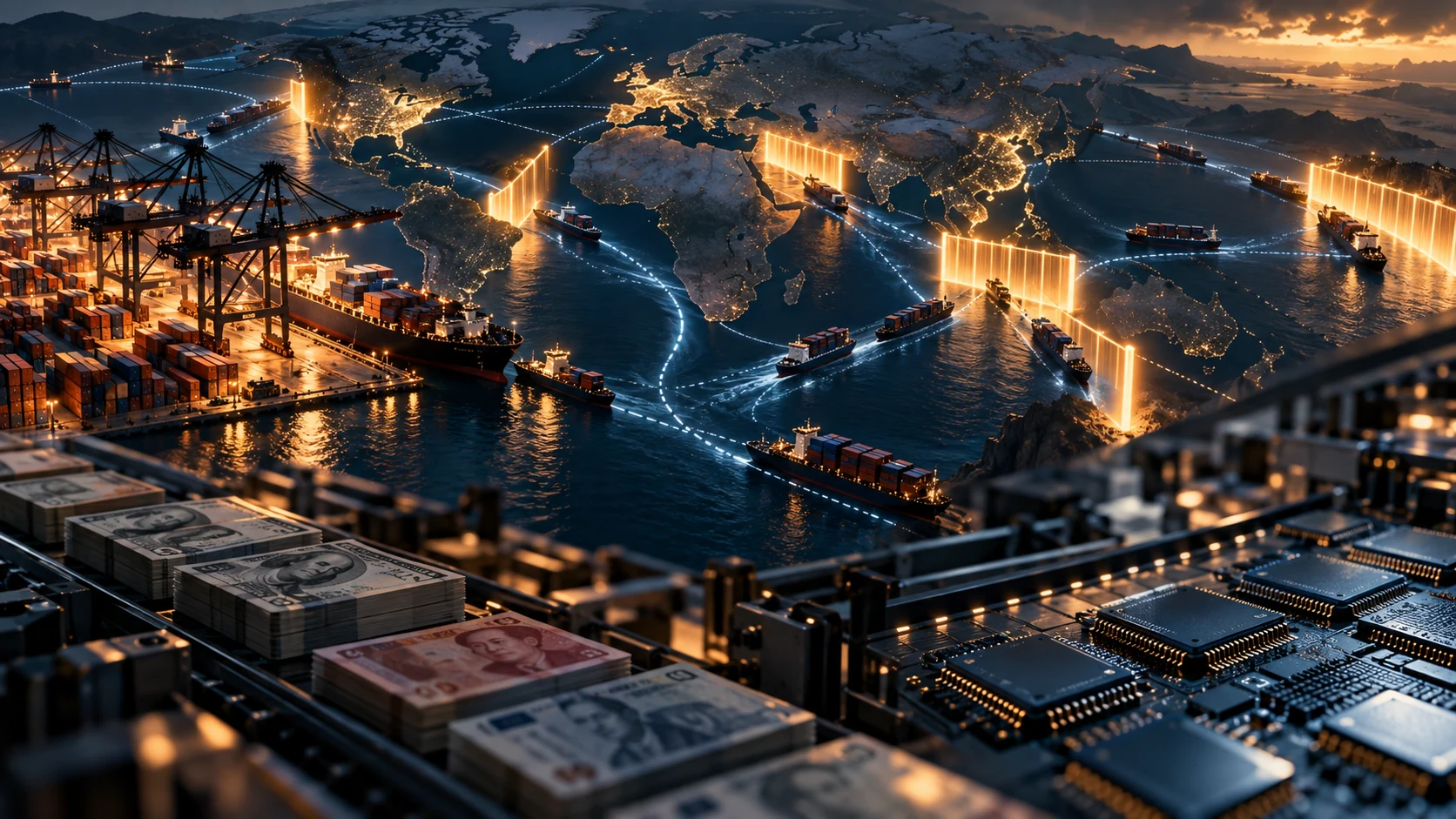
Economic sanctions allow governments to impose costs on other states, companies, organizations, or individuals without immediately resorting to military force. They can restrict trade, freeze financial assets, limit access to banking systems, block technologies, prohibit investment, suspend assistance, or prevent targeted actors from participating normally in international markets. Sanctions have become especially important in a highly interconnected world because economic dependence can create leverage as well as prosperity.
The basic logic is straightforward. If a country depends on access to foreign markets, financing, technology, energy, industrial inputs, or transportation networks, restrictions on that access can raise the economic cost of pursuing certain policies. Governments imposing sanctions hope that these costs will encourage changes in behavior, reduce an adversary's capabilities, signal political opposition, or make it more difficult to finance activities considered threatening.
Sanctions vary greatly in scope. Comprehensive sanctions may restrict broad areas of economic activity across an entire country. Targeted sanctions focus on specific individuals, companies, government agencies, banks, or sectors. Targeted measures are often designed to place pressure on political and economic elites while reducing harm to the wider population, although in practice the effects can still spread through the broader economy.
Financial sanctions are among the most powerful tools available to major economic powers. Modern international trade relies heavily on banks, payment systems, credit, insurance, and widely used currencies. Restrictions on financial transactions can therefore affect a country's ability to import goods, receive export revenue, borrow money, or conduct business internationally.
Freezing assets is one common approach. Governments can prevent sanctioned individuals or institutions from accessing property or funds located within their jurisdiction. Restrictions may also prevent domestic companies and banks from conducting transactions with designated entities. Because international finance is highly connected, these rules can sometimes influence firms in other countries as well.
Trade restrictions operate differently. Governments may prohibit imports from a target country, limit exports to it, impose tariffs, or ban specific categories of goods. Export restrictions can be particularly significant when they affect items that are difficult to replace, such as advanced machinery, specialized software, aerospace equipment, semiconductors, or components used in military systems.
Technology controls have become increasingly important because modern economic and military capabilities depend on complex supply chains. A country may be able to manufacture many products domestically while remaining dependent on foreign equipment needed to produce the most advanced versions. Restricting access to highly specialized technologies can therefore have effects far beyond the value of the goods directly covered by the sanctions.
Energy sanctions are another major category. Oil and gas exporters depend on customers, shipping, insurance, financing, and specialized equipment. Importing countries, meanwhile, depend on secure energy supplies. Attempts to restrict energy trade can therefore place pressure on exporters, but they can also increase prices for consumers and create costs for sanctioning states.
This illustrates one of the central problems with sanctions: economic pressure rarely moves in only one direction. Countries imposing restrictions may lose export markets, face higher prices, disrupt their own companies, or reduce access to important materials. The greater the economic integration between the two sides, the more difficult it may be to isolate one without creating consequences for the other.
The effect on third countries also matters. If a sanctioned state cannot trade normally with one group of countries, it may redirect commerce toward others. Alternative buyers may purchase discounted resources, while new intermediaries emerge to facilitate payments, shipping, or re-export. The effectiveness of sanctions therefore depends partly on how widely they are enforced.
Multilateral sanctions tend to be harder to evade than unilateral ones because fewer alternative markets remain available. When many large economies coordinate restrictions, a target may find it difficult to replace lost financing, technology, or customers. However, international coordination also requires compromise because participating governments often have different economic interests and political priorities.
The success of sanctions is difficult to measure because governments use them for several purposes. Sometimes the goal is to force an immediate policy reversal. In other cases, sanctions are intended to slow military development, restrict access to critical technology, impose long-term economic costs, punish behavior, or signal political unity. A policy may therefore have economic effects without achieving its maximum political objective.
The ability of a target government to absorb costs is crucial. Authoritarian governments may tolerate economic hardship that would create stronger political pressure in more competitive political systems. States facing major security concerns may accept significant economic losses rather than alter policies they consider essential. If leaders believe national survival or core territorial interests are at stake, economic pressure may have limited influence.
Domestic distribution also matters. Sanctions rarely affect every group equally. Wealthy individuals with foreign assets may face direct losses, while ordinary consumers experience inflation or shortages. Industrial sectors dependent on imported equipment may suffer more than sectors using local resources. Governments can also redirect scarce resources toward politically important groups or security institutions.
Sanctions may sometimes strengthen domestic political control. Leaders can portray foreign restrictions as evidence of external hostility and use them to justify tighter economic management or political repression. Economic hardship does not necessarily produce opposition to the government being sanctioned; it may instead increase nationalist sentiment.
Over time, sanctions can encourage adaptation. Companies find alternative suppliers, governments create new payment channels, and domestic industries may attempt to replace imported goods. Smuggling networks and intermediary firms can emerge. The longer restrictions remain in place, the more incentives targeted actors have to develop methods of circumvention.
This creates an important strategic paradox. Sanctions can exploit dependence, but repeated use of sanctions can encourage countries to reduce that dependence. A state that fears future financial restrictions may increase reserves in alternative currencies, build separate payment systems, diversify banks, or promote trade with partners outside the sanctioning coalition.
Technology sanctions can produce a similar response. Restrictions may slow access to advanced products in the short term while encouraging long-term investment in domestic alternatives. Whether this strategy succeeds depends on technological complexity, market size, skilled labor, industrial experience, research capacity, and access to substitute suppliers. Some technologies are much harder to reproduce than others.
Supply-chain diversification can also weaken future leverage. Governments and companies may deliberately accept higher production costs in exchange for reducing dependence on politically risky suppliers. Economic efficiency and strategic resilience can therefore pull policy in different directions.
Secondary sanctions increase leverage by threatening restrictions against third parties that continue dealing with the main target. These measures can be highly effective when the sanctioning country controls access to an important financial system or market. They can also create diplomatic tensions because other governments may view them as an attempt to apply domestic rules beyond national borders.
Sanctions must also be distinguished from embargoes and blockades. Economic sanctions are generally legal and financial restrictions imposed through domestic or international regulatory systems. A military blockade physically prevents trade and can constitute a much more serious act under international law and the laws of armed conflict. The distinction matters because economic coercion exists on a spectrum that can approach, but does not necessarily equal, military confrontation.
Humanitarian effects are another important consideration. Broad restrictions can make it more difficult to obtain medicine, food, medical equipment, or other essential goods even when humanitarian exemptions formally exist. Banks and companies may avoid lawful transactions because they fear violating complicated rules, a problem sometimes called overcompliance. Sanctions policy must therefore balance strategic objectives against unintended effects on civilian populations.
Enforcement determines much of a sanctions regime's practical value. Governments need customs agencies, financial intelligence, banking regulation, corporate reporting, international cooperation, and legal procedures capable of detecting evasion. Announcing sanctions is easier than ensuring that thousands of transactions comply with them.
Economic coercion works best when policymakers understand what the target values, where meaningful dependencies exist, and how quickly alternatives can be created. Restrictions on easily replaceable goods may have little effect. Control over a scarce financial network, specialized technology, or critical industrial input can provide much greater leverage.
Sanctions have become more prominent because modern globalization has created dense networks of economic dependence. The same financial systems, trade routes, technologies, and supply chains that support international prosperity can also be used as instruments of pressure. This does not make sanctions a simple substitute for war. They can fail, produce unexpected consequences, damage third parties, and encourage rival economic systems.
Their importance lies in the space they occupy between diplomacy and direct military force. Sanctions allow states to impose material costs while keeping political competition below the threshold of open war. As countries become more aware of their strategic dependencies, however, they also invest more heavily in resilience. Economic statecraft is therefore an ongoing contest between the ability to exploit interdependence and the ability to reduce vulnerability to it.
