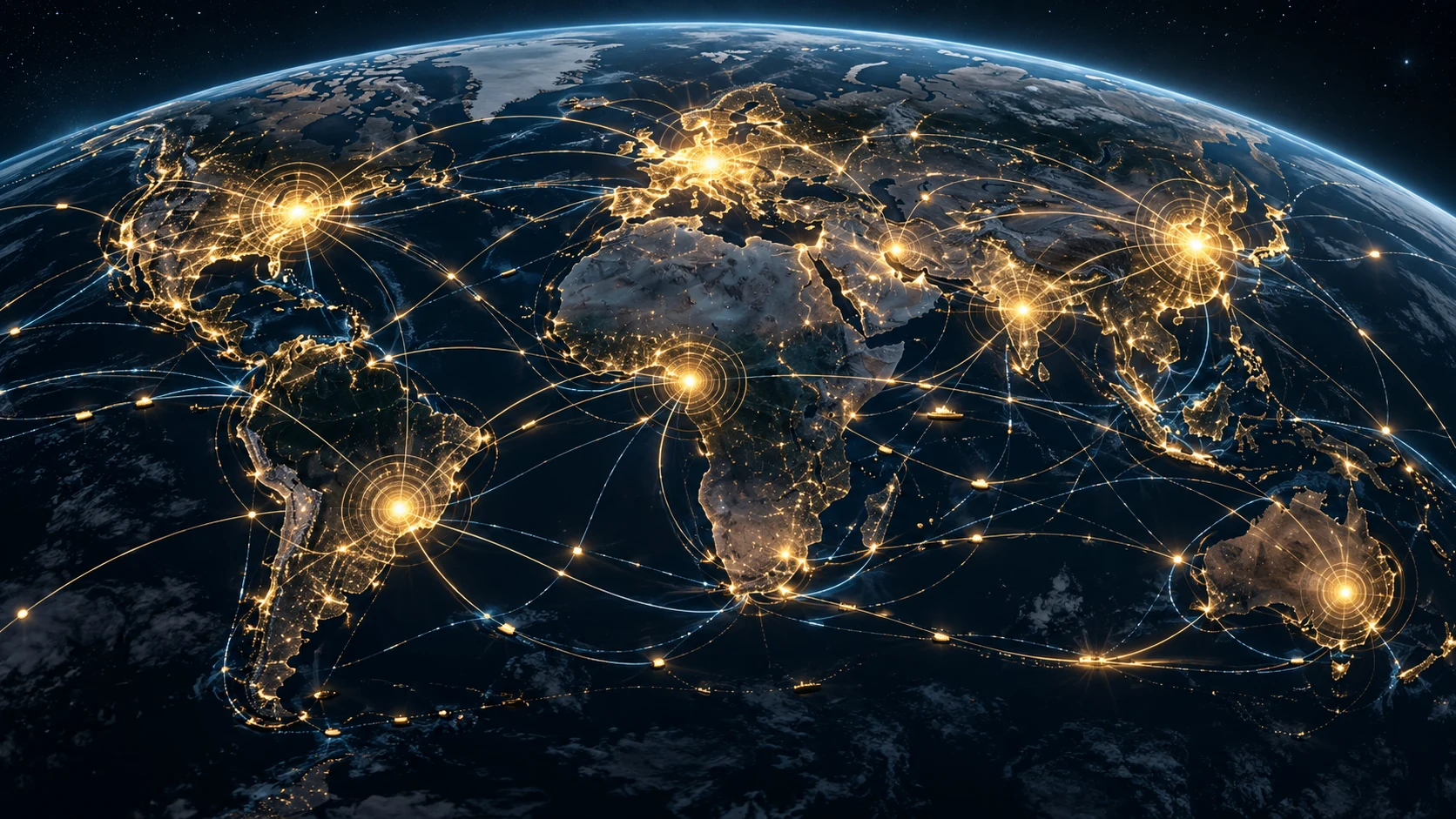
The structure of the international system depends partly on how power is distributed among major states. When one country possesses overwhelming military, economic, technological, and political advantages, analysts often describe the system as unipolar. When several major powers possess enough capability to influence international outcomes independently, the system becomes more multipolar. These categories are simplified models, but they help explain why alliances, institutions, strategic competition, and diplomatic behavior change as the global balance of power shifts.
Unipolarity does not mean one country controls the entire world. Even the strongest state faces military, economic, political, and geographic limits. It cannot dictate every decision made by other governments. Unipolarity instead means that one state possesses a significantly greater concentration of overall power than any individual rival.
A predominant power can influence the design of international institutions, security arrangements, trade rules, technological standards, and financial systems. Its military presence may extend across multiple regions, while allies depend on it for security guarantees. Its currency and capital markets may become central to international finance.
This concentration of power can produce a degree of international stability when other states believe challenging the leading power would be prohibitively expensive. However, unipolarity can also create resentment. Governments may fear excessive dependence on one state or object to rules they believe reflect the dominant power's interests.
Balancing behavior can emerge in response. States may expand military capabilities, strengthen regional partnerships, develop alternative financial systems, or invest in technologies that reduce strategic dependence. These efforts do not necessarily require a formal anti-hegemonic alliance. Balancing can occur gradually through economic and technological diversification.
Multipolarity creates a different environment. Instead of one predominant center of power, several states possess significant capabilities. These powers may dominate different regions or different dimensions of influence. One may be strongest militarily, another may possess a vast industrial base, while others control important energy resources, technologies, markets, or geographic positions.
This makes international alignments more flexible. A country does not necessarily need to choose a single partner for every issue. It can cooperate with one power on security, trade extensively with another, import energy from a third, and rely on technology from a fourth.
Such mixed relationships are increasingly common because economic globalization created dense networks of interdependence. Traditional alliances still matter, but they do not always determine commercial relationships. A state may have serious security disagreements with an important trading partner while maintaining substantial economic ties.
Multipolar systems can therefore provide smaller and middle powers with greater room for maneuver. When several major powers compete for influence, other states may gain bargaining leverage. Governments can negotiate investment, defense cooperation, infrastructure financing, or technology partnerships with multiple actors.
This does not mean smaller states have complete freedom. Competition among major powers can also place them under pressure to align. Countries located in strategically important regions may face competing demands over military access, infrastructure, technology, diplomatic recognition, or sanctions.
The balance of power becomes more complicated when different forms of power do not align neatly. Military strength is only one dimension. Economic size, financial influence, industrial capacity, population, technology, natural resources, and alliance networks all matter.
A state may possess enormous economic capacity without equivalent military reach. Another may have advanced armed forces but a smaller economy. A third may control strategic energy exports. Measuring polarity therefore requires looking at combinations of capabilities rather than using a single ranking.
Nuclear weapons also complicate traditional power calculations. A state does not need to match a rival's entire conventional military to impose catastrophic costs through nuclear retaliation. Nuclear deterrence therefore allows some powers to maintain greater strategic autonomy than their economic size alone would suggest.
Technology adds another layer. Countries controlling key semiconductor equipment, advanced software, AI infrastructure, satellite systems, or telecom networks may possess leverage disproportionate to their conventional military strength. Modern multipolarity can therefore involve several overlapping hierarchies.
Economic interdependence makes this structure different from earlier periods of great-power rivalry. Major powers today are often connected through trade, investment, finance, supply chains, and technology even while competing strategically. This creates both restraints and vulnerabilities.
Governments increasingly respond with policies aimed at reducing strategic dependence. They diversify suppliers, subsidize domestic production, restrict sensitive technology exports, review foreign investment, and build strategic reserves. The goal is usually not complete economic separation but greater resilience.
This distinction matters because a multipolar world does not necessarily mean the end of globalization. Trade can remain extensive while becoming more politically managed. Supply chains may continue crossing borders but become concentrated among trusted partners or diversified across several regions.
Alliances may also become more complex. Traditional collective defense arrangements continue to matter, but countries increasingly participate in overlapping partnerships focused on specific issues such as maritime security, technology, infrastructure, or critical minerals.
These flexible arrangements can create what might be called strategic layering. A state may belong to one military alliance, participate in another economic forum, join a regional infrastructure initiative, and cooperate with different partners on climate or public health.
Institutions are likely to reflect this fragmentation. Some global organizations may become harder to use when major powers disagree. At the same time, smaller coalitions and regional institutions may become more active because they involve countries with more similar interests.
Financial power will remain an important component of the system. The ability to impose sanctions, control access to major currencies, and influence global capital markets provides substantial geopolitical leverage. However, widespread concern about financial vulnerability may encourage diversification over time.
Energy relationships are changing as well. Traditional oil and gas exporters remain important, while countries controlling critical minerals, battery supply chains, renewable technologies, and grid equipment gain influence. The energy transition therefore does not eliminate resource geopolitics; it changes its structure.
Demographic trends may further alter the balance. Some established powers face aging populations and slower labor-force growth, while other regions contain rapidly expanding younger populations. Whether these demographic shifts translate into geopolitical influence will depend on education, productivity, institutions, and economic development.
Middle powers may become more influential in this environment. Countries with significant economies, strategic geography, military capability, natural resources, or technological specialization can shape outcomes even if they are not superpowers. Their choices can determine whether coalitions succeed or fail.
This creates incentives for major powers to compete for partnerships rather than simply impose demands. Infrastructure investment, trade access, technology transfers, defense cooperation, and development finance can all become tools for building influence.
Multipolarity can increase diplomatic flexibility, but it can also create uncertainty. When several powers compete simultaneously, governments may find it harder to predict who will support whom during crises. Alliances may be less rigid, and temporary coalitions may form around specific issues.
The risk of miscalculation can therefore increase. More independent centers of power mean more strategic relationships that must be managed. A conflict between two states may draw in others through alliances, economic interests, or regional security commitments.
On the other hand, multiple powers can also prevent any one state from dominating the system. Competition can create checks and balances at the international level. Smaller states may benefit when major powers must offer incentives to gain support.
Whether multipolarity is more or less stable than unipolarity has long been debated. Much depends on the specific distribution of power, the strength of institutions, the clarity of alliances, the role of nuclear deterrence, and the willingness of governments to manage competition.
The transition between international orders can be particularly difficult. Rising powers may demand greater influence while established powers seek to preserve existing advantages. Disputes over institutions, territories, technology, trade, and military access can become more intense during these periods.
Yet transitions do not automatically produce war. Governments can adjust institutions, negotiate spheres of cooperation, establish crisis-management mechanisms, and accept limited changes in the distribution of influence. Economic interdependence can also raise the costs of direct conflict.
The emerging international system is therefore unlikely to fit perfectly into either a purely unipolar or purely multipolar model. Different regions and sectors may display different structures. One power may remain dominant in global finance, several may compete in military affairs, and a different group may lead in particular technologies or resources.
This uneven distribution makes contemporary geopolitics more complicated than a simple contest between two blocs. Countries increasingly build portfolios of relationships rather than relying on a single alignment for every national need.
The changing balance of power is therefore best understood as a movement toward greater strategic pluralism. More states possess the economic, technological, military, and political capacity to influence international outcomes, while global interdependence prevents them from operating in complete isolation.
The future of multipolarity will depend not only on how many powerful states exist, but on how they manage overlapping dependencies. Security, trade, energy, finance, technology, and diplomacy may increasingly follow different patterns. A country may compete with another in one area and cooperate with it in another.
This complexity is likely to define the emerging world order. Power is becoming more distributed, but dependence remains widespread. States are gaining more options while also confronting more relationships they must carefully manage.
