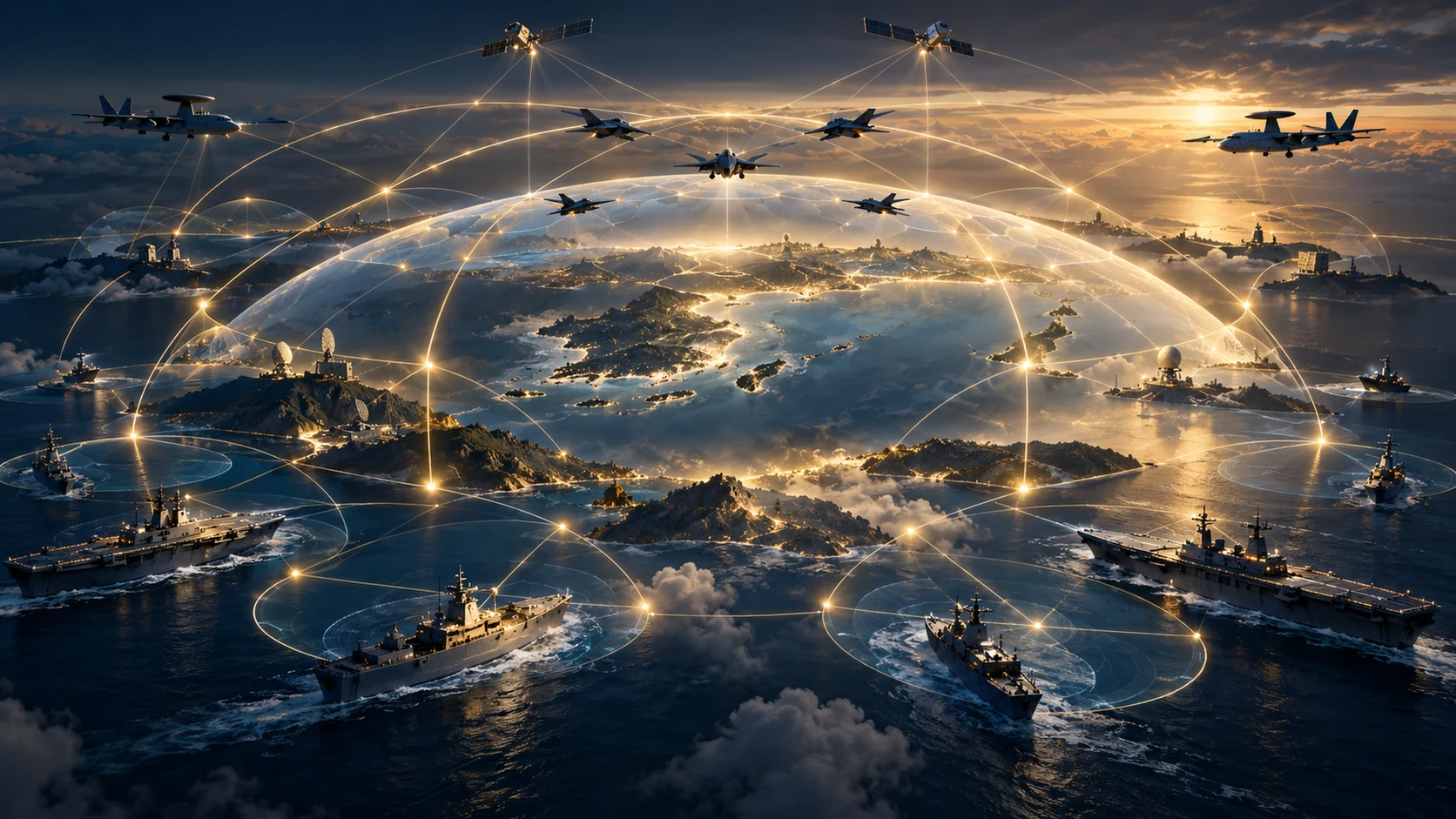
Military alliances exist because states rarely have enough resources to manage every security threat alone. By cooperating, countries can combine armed forces, intelligence, technology, logistics, industrial capacity, geographic access, and political influence. Alliances can make aggression more costly, reduce the burden on individual members, and help weaker states compensate for disadvantages they could not overcome independently. At the same time, alliances create their own risks because members must decide how much they trust one another, how much support they are truly willing to provide, and whether cooperation may draw them into conflicts they would otherwise avoid.
At the most basic level, an alliance is a security commitment between states. The exact form varies considerably. Some alliances contain explicit promises of mutual defense, while others are looser arrangements centered on consultation, military cooperation, intelligence sharing, or limited support. The strength of an alliance depends not only on its formal language but also on whether potential adversaries believe its members would actually honor their commitments during a crisis.
Deterrence is one of the main reasons alliances are formed. A state that appears vulnerable on its own may be much harder to attack if an aggressor expects that several other countries will respond. This can change the strategic calculation before a conflict begins. The objective is not necessarily to fight a war more effectively, but to make war less attractive in the first place by increasing the expected costs of aggression.
For smaller states, this function can be particularly important. A small country may not have the population, economy, industrial base, or military resources needed to match a much larger rival. An alliance can compensate for this imbalance by connecting its security to the capabilities of stronger partners. In return, the smaller state may provide strategically valuable territory, ports, bases, intelligence, political support, or specialized military capabilities.
Larger powers also gain from alliances. Partners can extend geographic reach, reduce logistical difficulties, provide access to military facilities, and share the financial and political costs of security commitments. Alliances can also strengthen diplomatic influence by showing that a country's position is supported by a broader coalition rather than by one government acting alone.
This leads to the broader concept of the balance of power. States often form or strengthen alliances when they fear that one country is becoming too dominant. If a rising power accumulates overwhelming military, economic, or technological advantages, other states may cooperate to prevent it from controlling the regional or international system. Alliances can therefore emerge not because all members share identical values or interests, but because they share concern about a common threat.
A common threat can unite countries that otherwise disagree on many issues. Governments may cooperate militarily while competing economically or maintaining different political systems. Security partnerships are often pragmatic arrangements shaped by strategic necessity. This helps explain why alliances should not be understood simply as groups of countries with similar identities. Shared interests may matter more than ideological similarity.
Geography strongly influences alliance formation. Countries located near powerful rivals have greater incentives to seek external support. States controlling strategic coastlines, islands, ports, airfields, or transit corridors may become important partners because their territory helps larger powers project force or protect trade routes. Alliances therefore connect military capability with geography.
The military value of an alliance depends on more than the combined number of soldiers or weapons. Members must be able to operate together. This requires common procedures, compatible communications systems, joint training, coordinated command structures, logistical planning, intelligence sharing, and sometimes standardized equipment. Without these elements, the theoretical strength of an alliance may be difficult to use effectively during a crisis.
Logistics are especially important. Military operations require fuel, ammunition, spare parts, maintenance, transport, medical support, communications, and secure supply routes. Alliances can create networks of bases and infrastructure that allow forces to move across large regions. A country that cannot sustain operations far from home may gain much greater reach when partners provide ports, airfields, warehouses, and transport corridors.
Technology adds another layer. Advanced weapons systems increasingly depend on software, sensors, satellites, secure communications, semiconductors, intelligence networks, and specialized industrial supply chains. Alliance relationships can provide access to technologies that individual states would struggle to develop independently. Joint research and procurement can also reduce costs and improve interoperability.
Nuclear deterrence introduces a particularly important alliance function. A nuclear-armed state may extend security guarantees to allies that do not possess nuclear weapons themselves. This arrangement can discourage adversaries from attacking those allies while reducing incentives for every country to develop its own nuclear arsenal. However, such guarantees are only effective if adversaries believe they are credible.
Credibility is therefore central to alliance politics. A written commitment has limited value if governments doubt that it would be honored under pressure. States try to strengthen credibility through military deployments, joint exercises, integrated command systems, political statements, defense planning, and permanent infrastructure. These measures signal that supporting an ally would not require an entirely new decision during a crisis because cooperation has already been institutionalized.
Credibility creates a difficult problem, however. The more automatic and convincing an alliance commitment becomes, the greater the risk that a state will be drawn into a conflict caused by another member. This is sometimes called the danger of entrapment. A government may worry that an ally will behave more aggressively because it expects support if tensions escalate.
The opposite fear is abandonment. A state may worry that allies will refuse to help when support is most needed. This concern is especially serious for smaller members that rely heavily on external protection. Governments may therefore seek stronger guarantees, permanent troop deployments, defense agreements, or deeper institutional integration.
Alliance politics constantly balances these two fears. Members want commitments strong enough to prevent abandonment but not so unconditional that they encourage reckless behavior. This is one reason defense agreements often contain procedures for consultation rather than completely automatic responses. Governments want flexibility while still maintaining deterrence.
Burden sharing creates another recurring source of tension. Different members may spend very different amounts on defense or contribute different types of resources. Larger members sometimes complain that smaller allies benefit from protection without contributing enough. Smaller members may respond that they provide strategically important territory or that their economic capacity is more limited. Debates over fairness can affect the political cohesion of an alliance even when the underlying security partnership remains strong.
Threat perception also varies. Members of the same alliance may disagree about which dangers deserve priority. A country located near one potential adversary may consider that threat urgent, while a geographically distant ally may focus on terrorism, maritime security, cyberattacks, migration, or instability elsewhere. Maintaining a durable alliance therefore requires continuous political negotiation over priorities.
Domestic politics can complicate these relationships. Governments change, public opinion shifts, budgets tighten, and political parties may disagree about international commitments. An alliance that appears strong under one administration may become less predictable under another. Adversaries often watch these domestic debates closely because doubts about political unity can weaken deterrence.
Economic ties can create additional complications. Two countries may be military allies while maintaining different trade relationships with a rival. One member may depend heavily on that rival for energy, technology, investment, or export markets. Strategic alignment and economic interdependence therefore do not always point in the same direction.
Modern alliances increasingly address threats beyond conventional warfare. Cybersecurity, space systems, critical infrastructure, disinformation, supply-chain resilience, and advanced technology have become part of security cooperation. A cyberattack on financial networks or electricity systems can damage a country without traditional military invasion, forcing alliances to reconsider what counts as an attack and what type of collective response is appropriate.
The economic dimension has also expanded. Export controls, sanctions, industrial policy, technology restrictions, and critical supply chains can support broader strategic goals. Alliance cooperation may involve protecting semiconductor production, diversifying energy sources, securing rare minerals, or coordinating standards for new technologies. Military alliances are therefore becoming connected to wider questions of economic and technological security.
Not all alliances survive. Some disappear when the threat that created them fades. Others weaken because members develop conflicting interests or no longer trust one another. Alliances are political institutions rather than permanent features of geography. Their durability depends on whether members continue to believe that cooperation provides more security than they could achieve separately.
The importance of alliances ultimately comes from the fact that power can be pooled. A country's strategic position depends not only on its own population, military, economy, and technology but also on the resources it can access through partnerships. This can significantly alter the balance between states.
Military alliances therefore occupy a central place in international politics because they transform individual security problems into collective ones. They can deter aggression, strengthen weaker states, expand the reach of major powers, and stabilize regional balances. Yet they also produce difficult questions about credibility, dependence, burden sharing, abandonment, and entrapment. Their effectiveness depends not simply on the promises written in treaties, but on whether members can maintain the political trust, military integration, and strategic coordination required to make those promises believable.
